
plants
scroll
Plants Scroll


Lissy & Ellen
/04 methods
-interview
-online survey
/01 goal
Develop a system that encourages interaction and communication between humans and plants in the household.
/02 ref.
-language of flower ikebana, chants of Sennar, floral Morphology
-doom scroll
/03 equip.
-Arduino, touch sensor
-Touchdesigner
design:
Plant Scroll
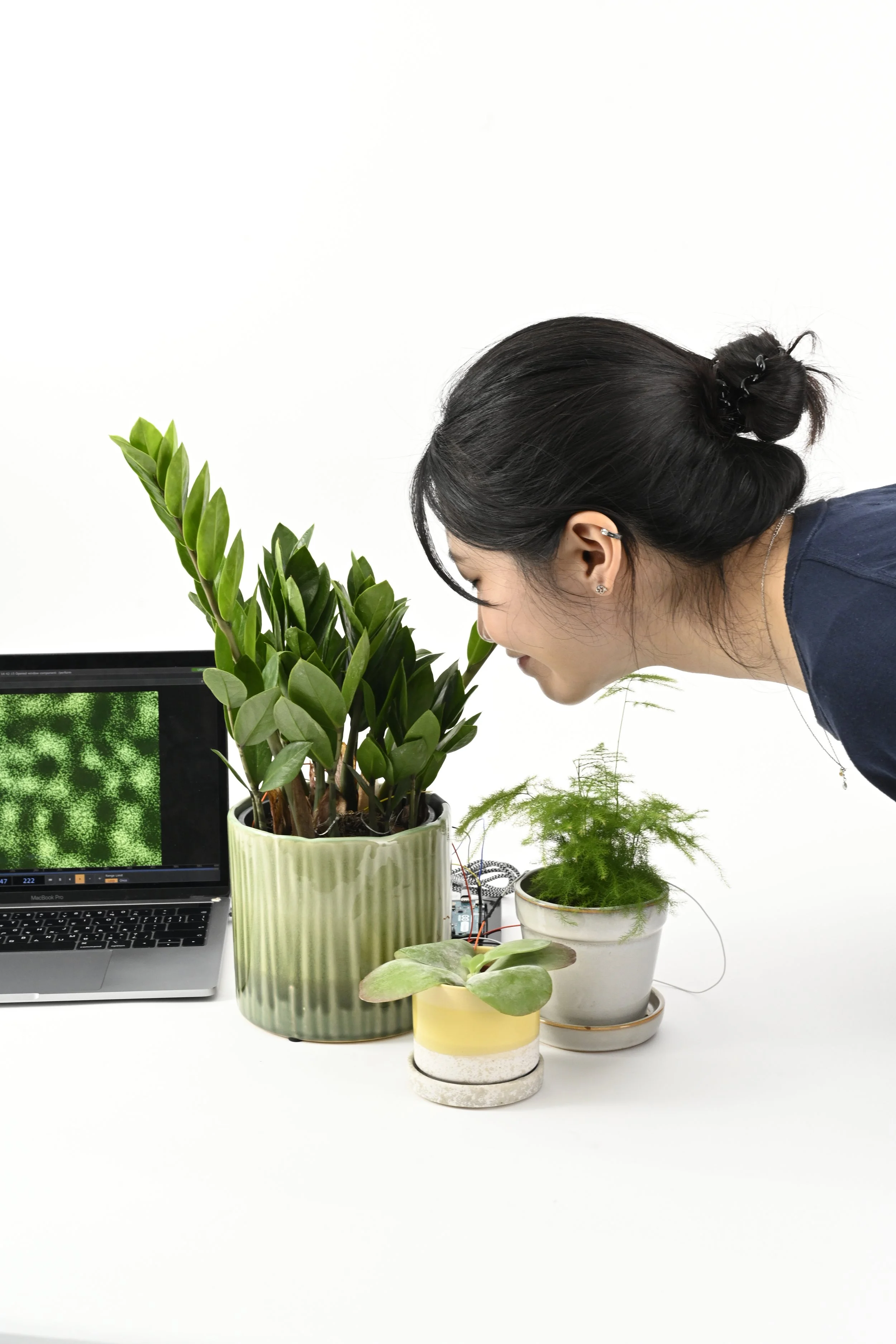
Photograph by Lissy Li
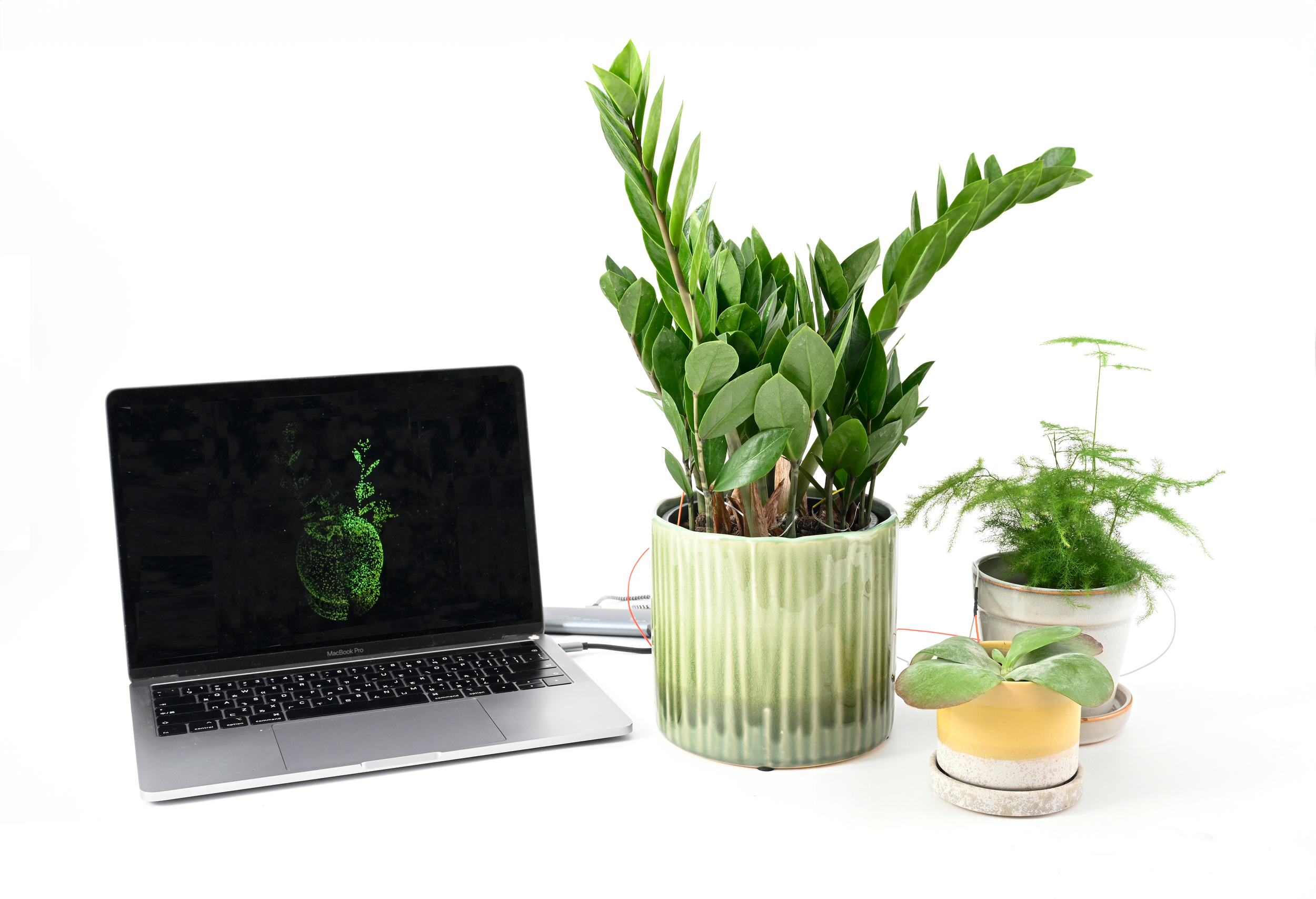
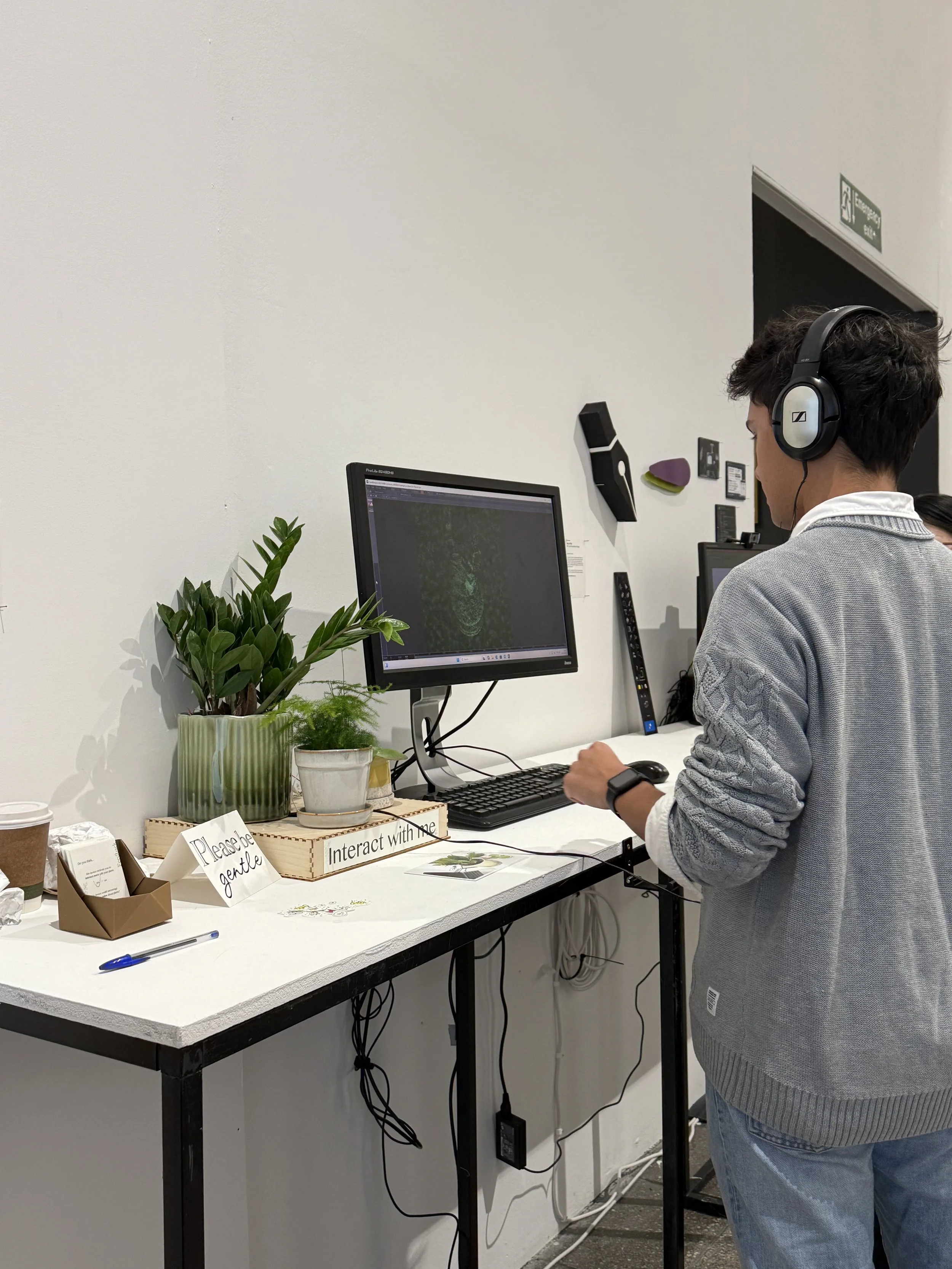
Each time you approach or touch the plant, a unique combination of sound and visuals is triggered, transforming the moment of interaction into something both visible and audible.
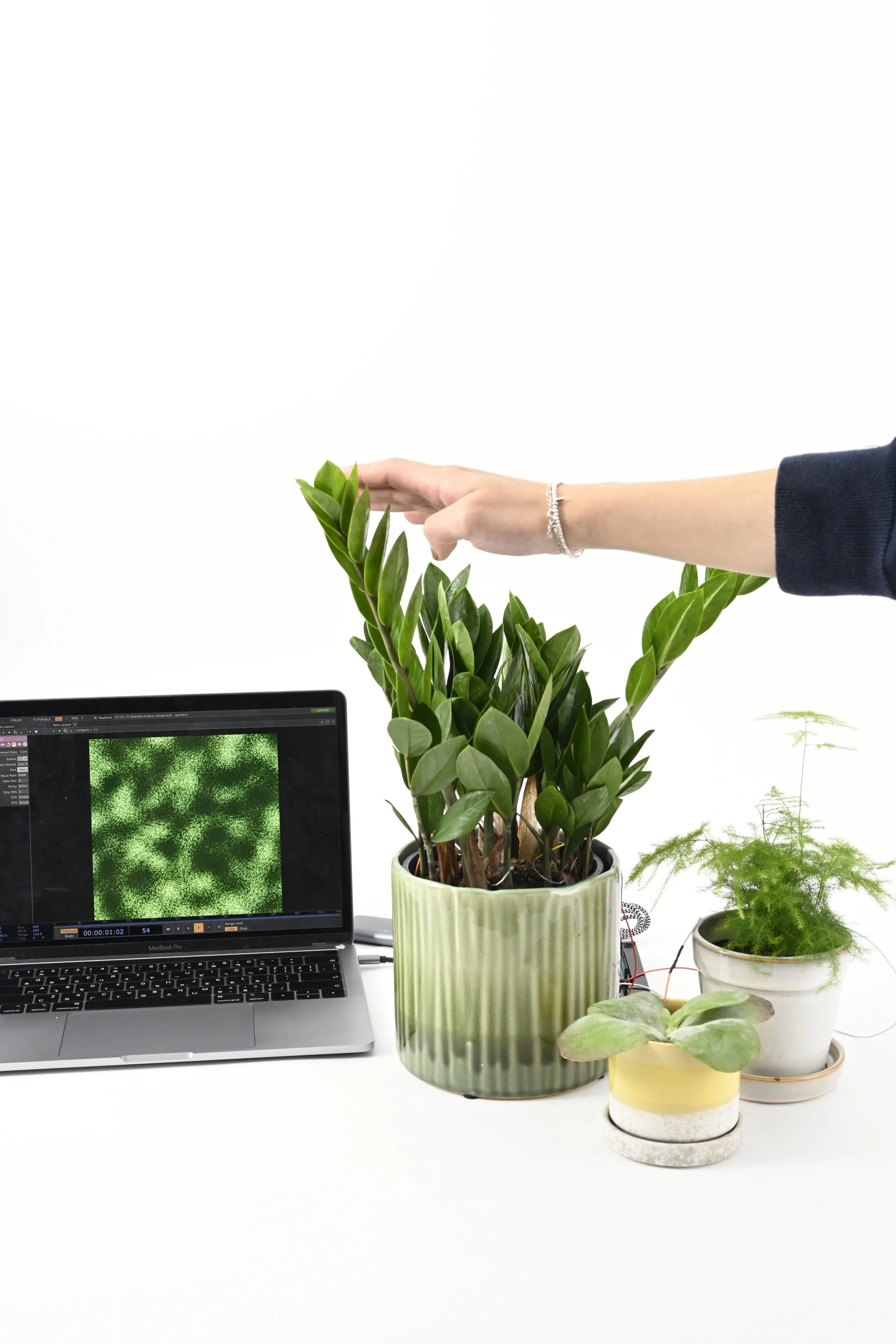
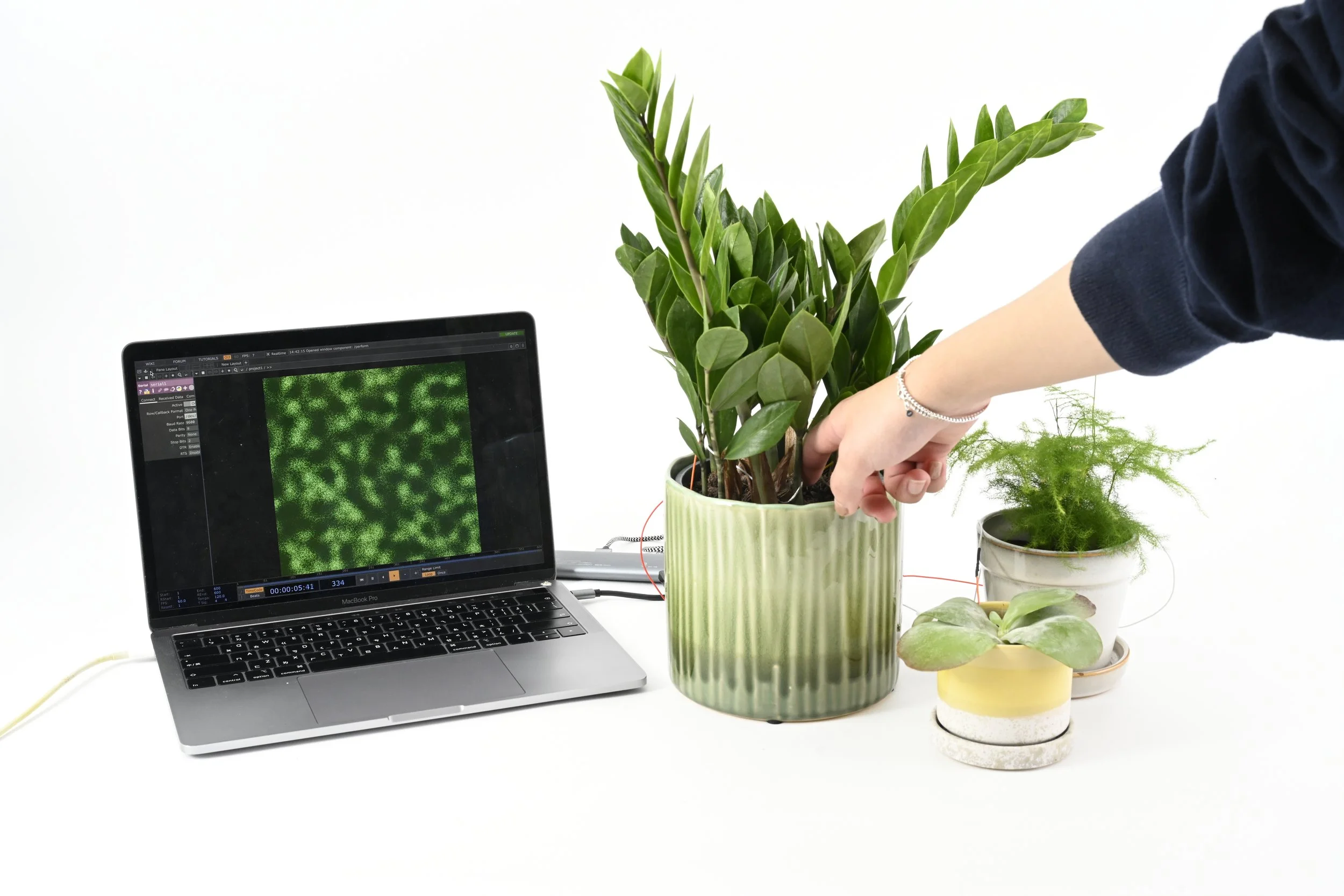
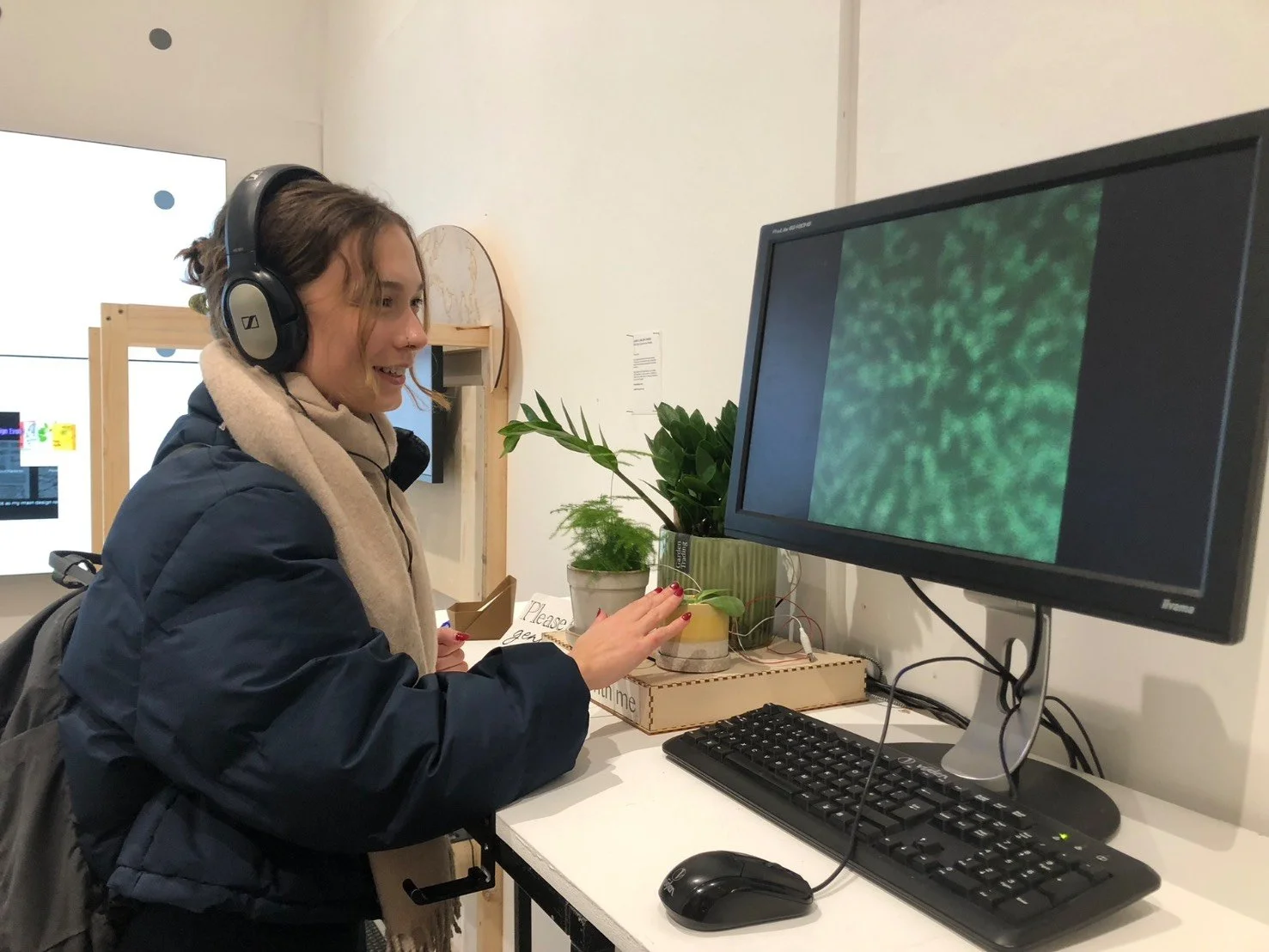
user feed back
During the show, we spoke with visitors about their relationships with houseplants and how the installation shaped their experience. Most participants found the interaction playful and engaging, with several describing it as “being a DJ” as shifting sounds and visuals responded to their movements. The surprise and immediacy of the feedback encouraged repeated interaction.
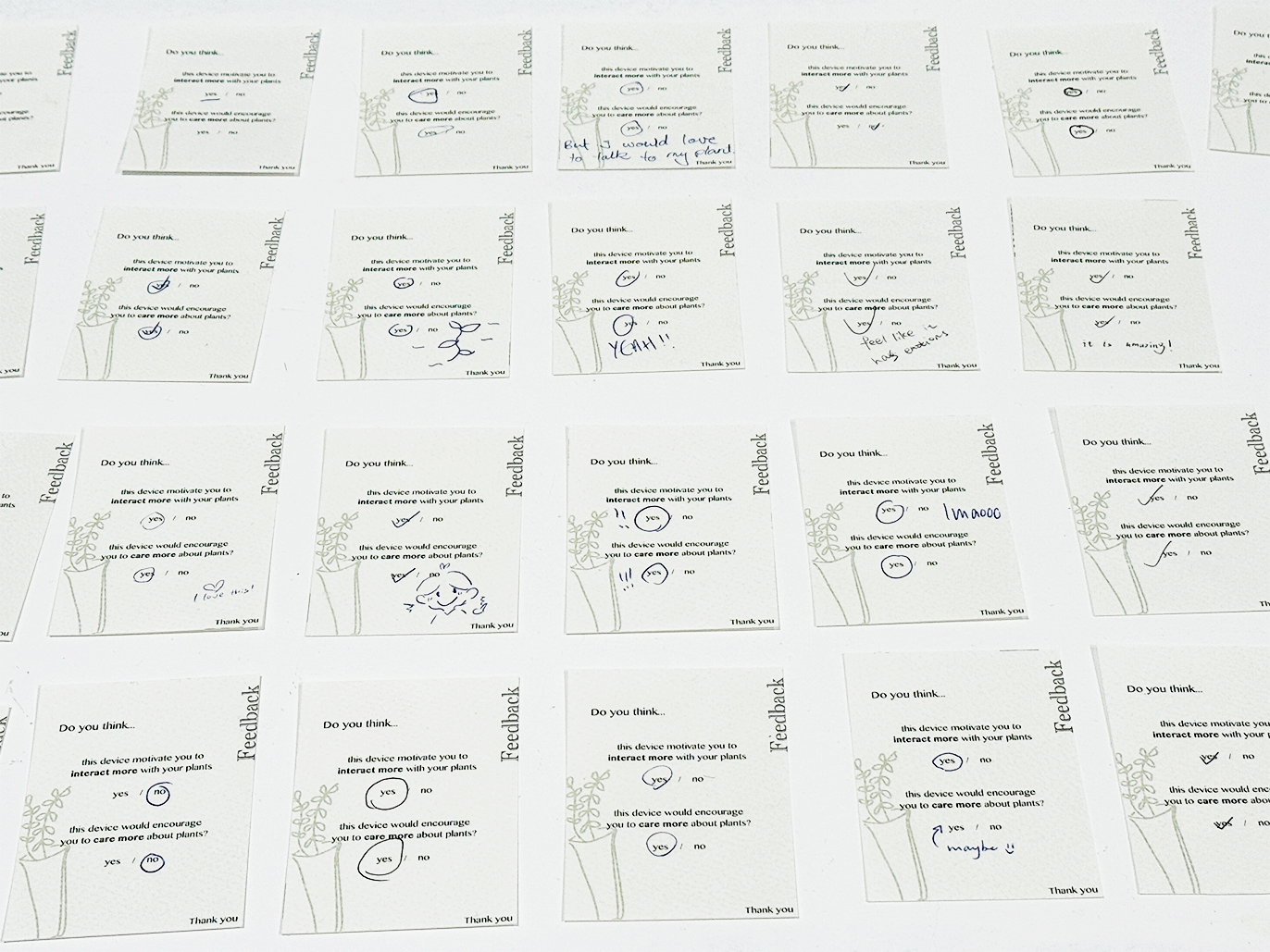
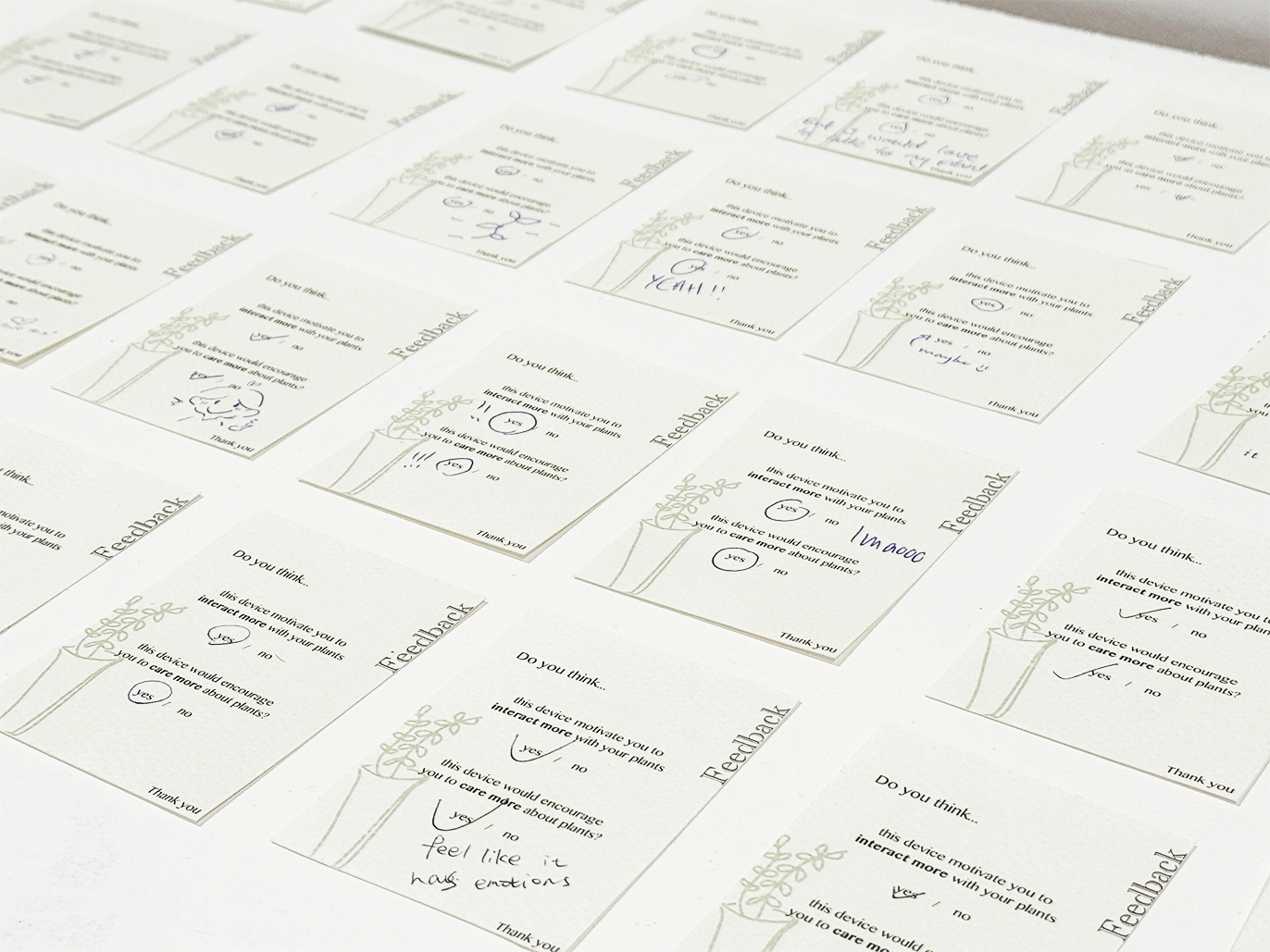
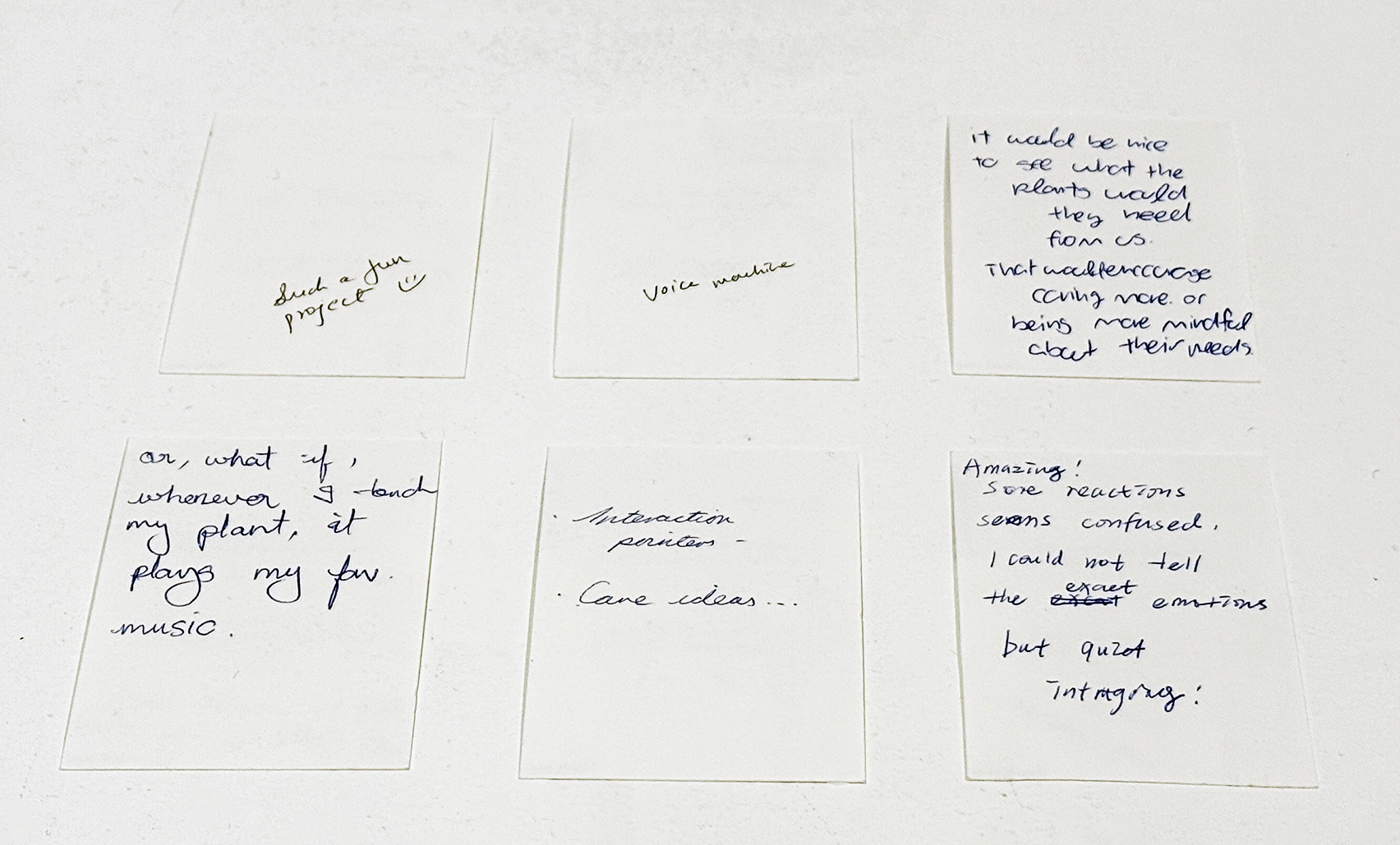
We also collected written feedback, which showed that over 80% of participants felt more motivated to revisit and care for their plants. While some found the meme-based audio confusing or distracting, many imagined the sounds as the plant’s “voice,” revealing a strong curiosity about plant expression and multispecies communication.
design focus
The core of our project explores the relationship between humans and houseplants through an interactive system that translates plant signals into sensory feedback.
Our approach focuses on two key ideas:
Representing the plant’s perspective, finding ways to express what plants might want to communicate to humans.
Creating a playful experience that encourages people to return and engage with their plants regularly.
concept to system
Our project evolved significantly from concept to technical execution. Initially, we aimed to sense and translate the biological signals of plants into perceptible forms, making their invisible processes visible to humans. However, practical limitations shaped our direction: the lack of scientific-grade sensors and the subtlety of plant signals made direct translation difficult.
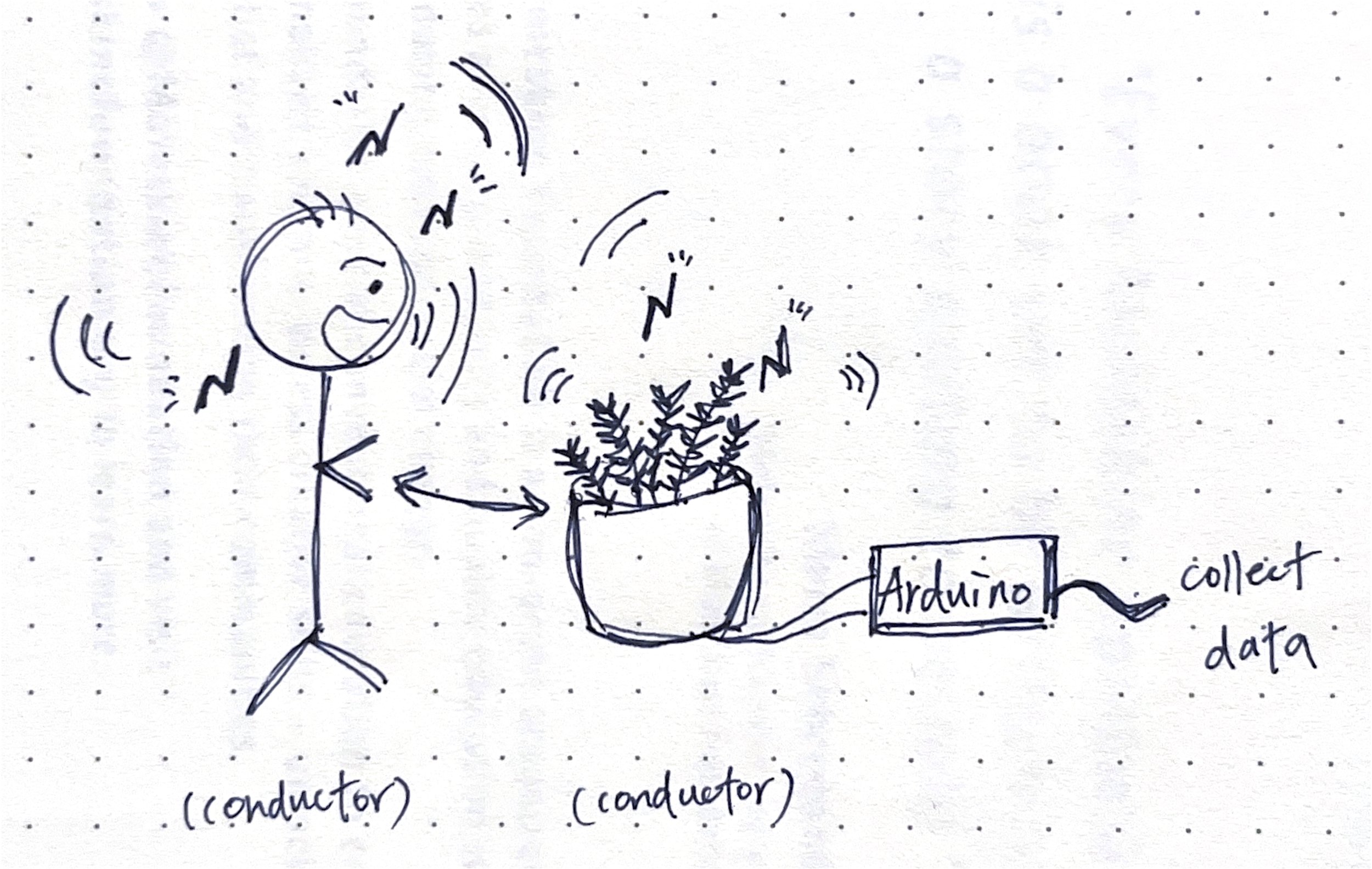
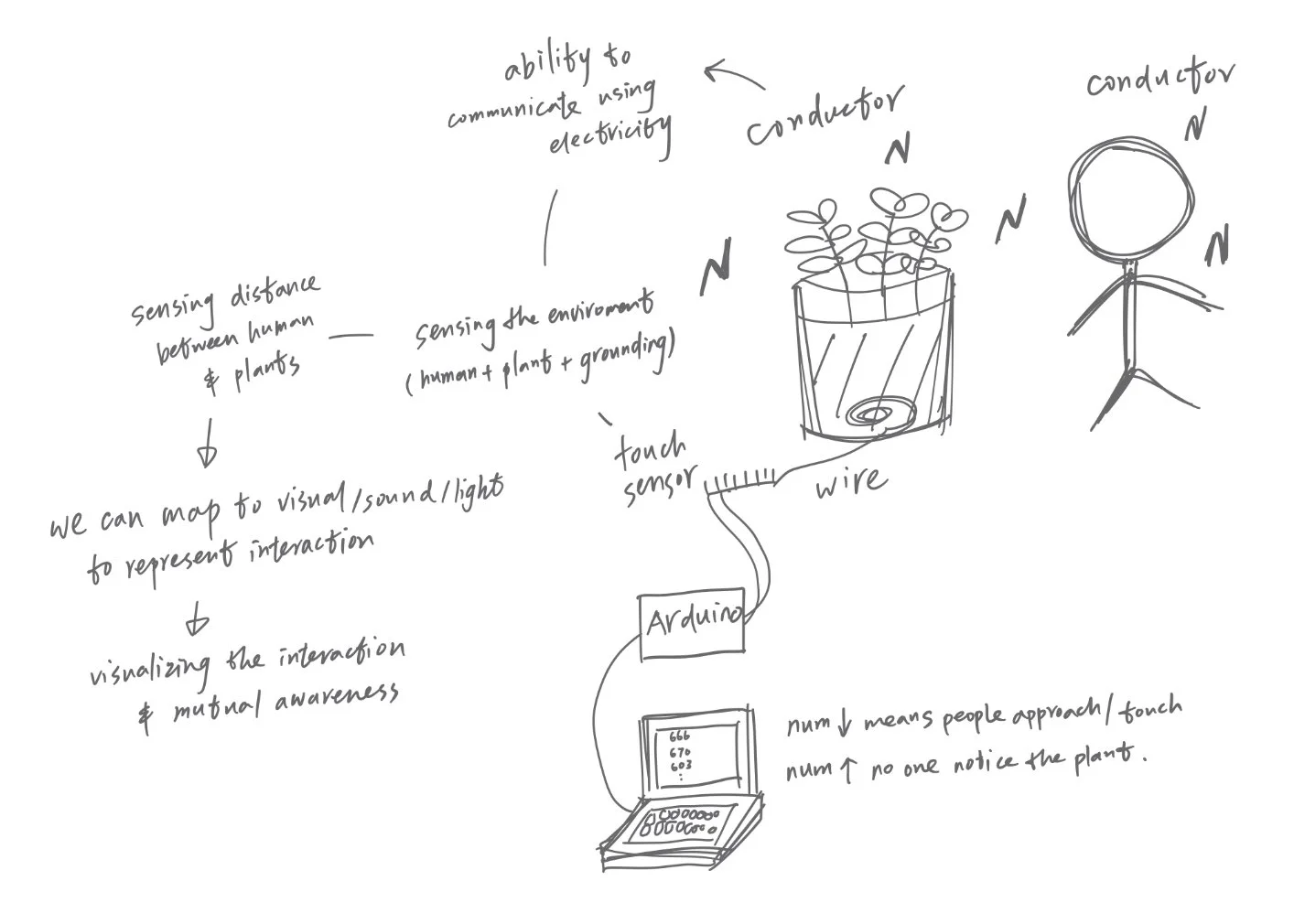
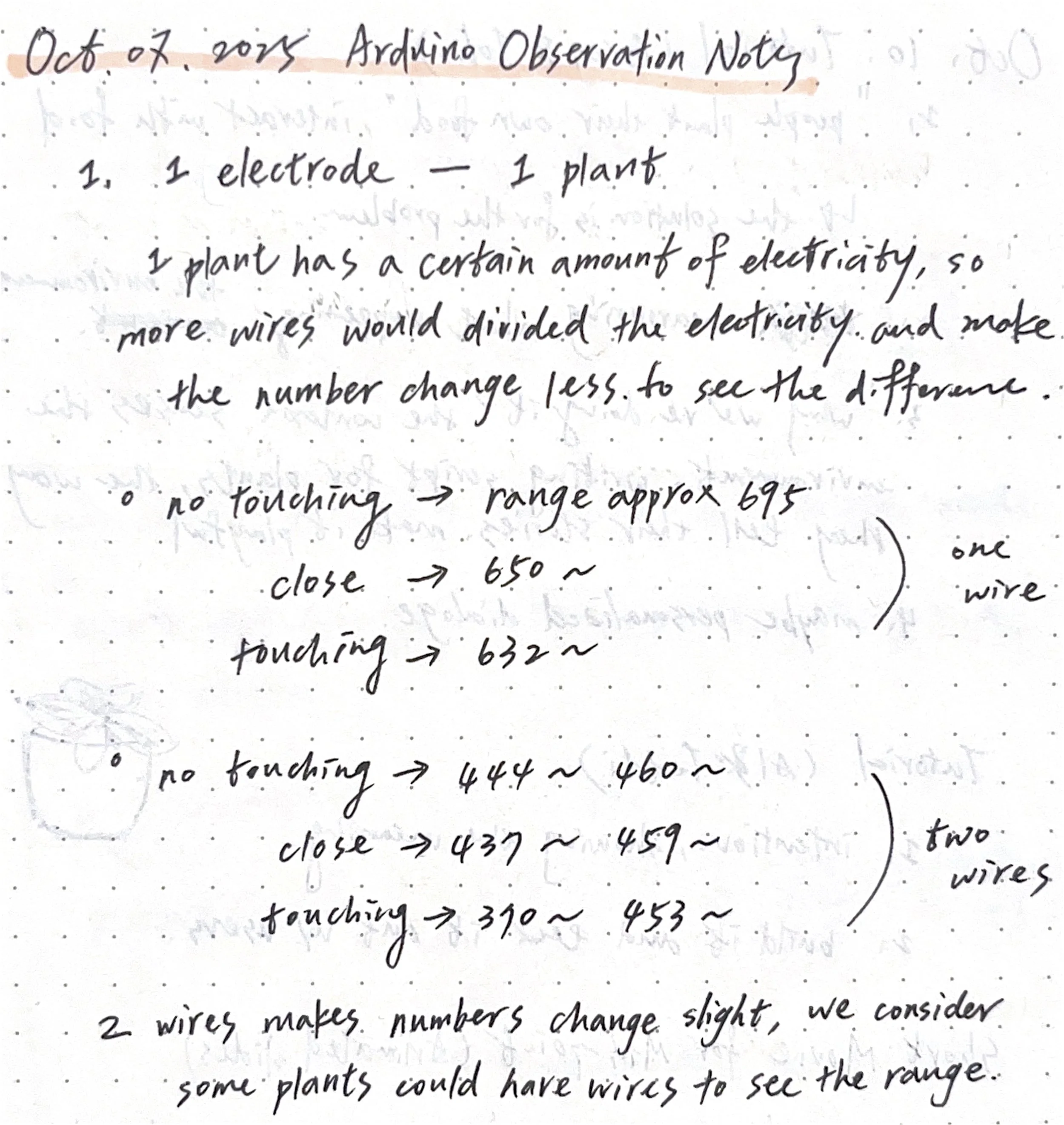
Instead, we reinterpreted interaction itself as a signal. Using a touch sensor connected to an Arduino, we captured the electrical relationship between plant and human, creating a “cyber plant” that responds to proximity and touch.
In this way, the plant becomes a new kind of interface, an interactive medium that replaces the phone as the platform for engagement.
behind the scene
Documenting the Design Process


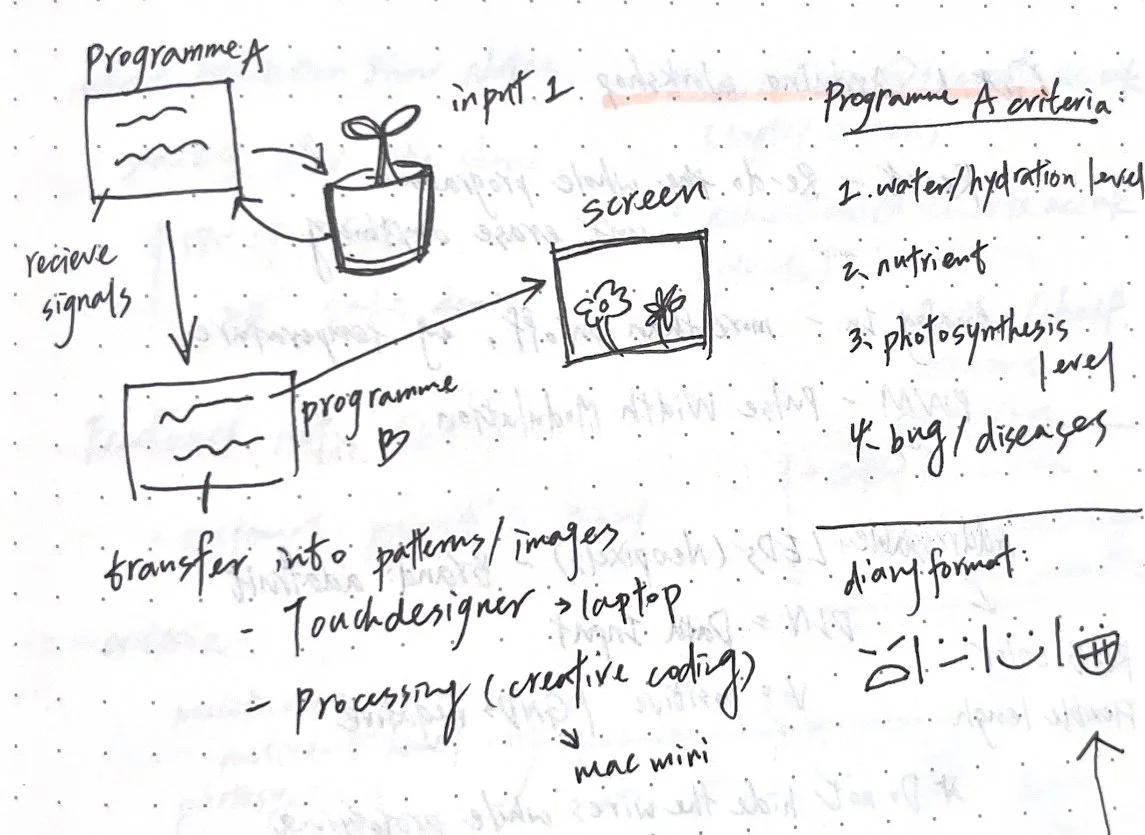
fig.1 Notes of brainstorming
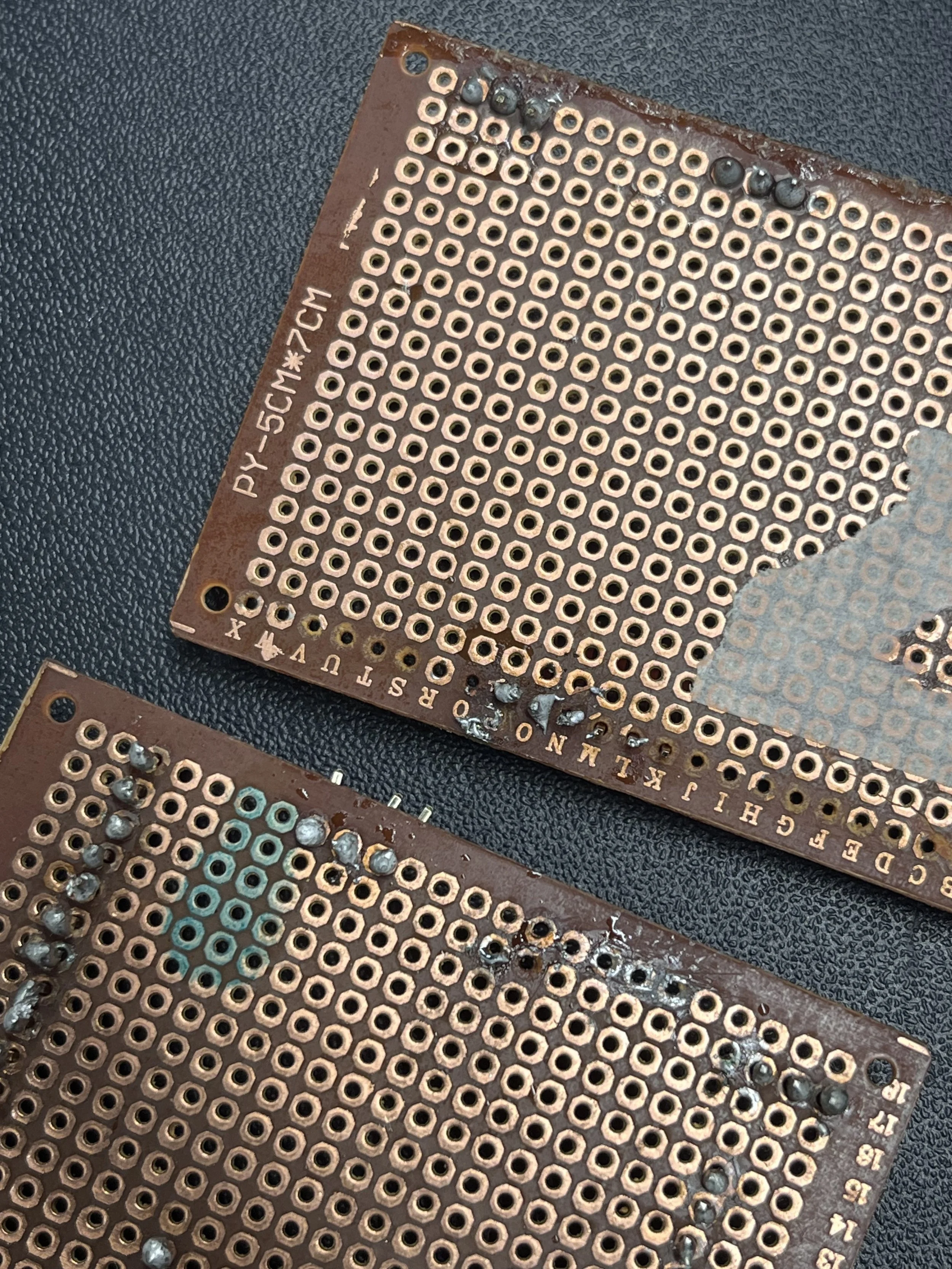
fig.3 Practicing soldering wires
vid.1 Exploring different sensors for our system

gif.1 Exploring different visuals on touch designer
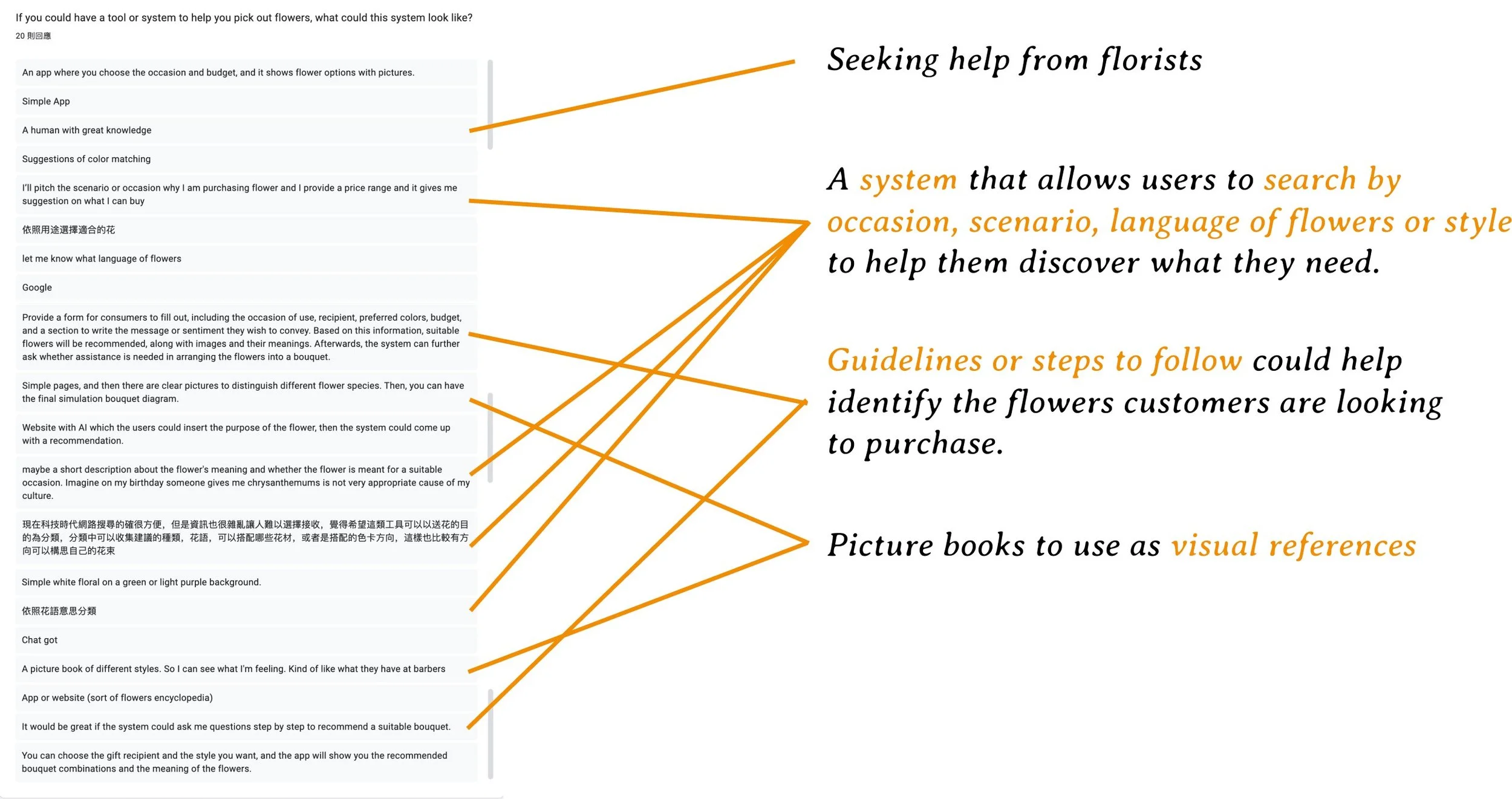
fig.2 Insights from online survey
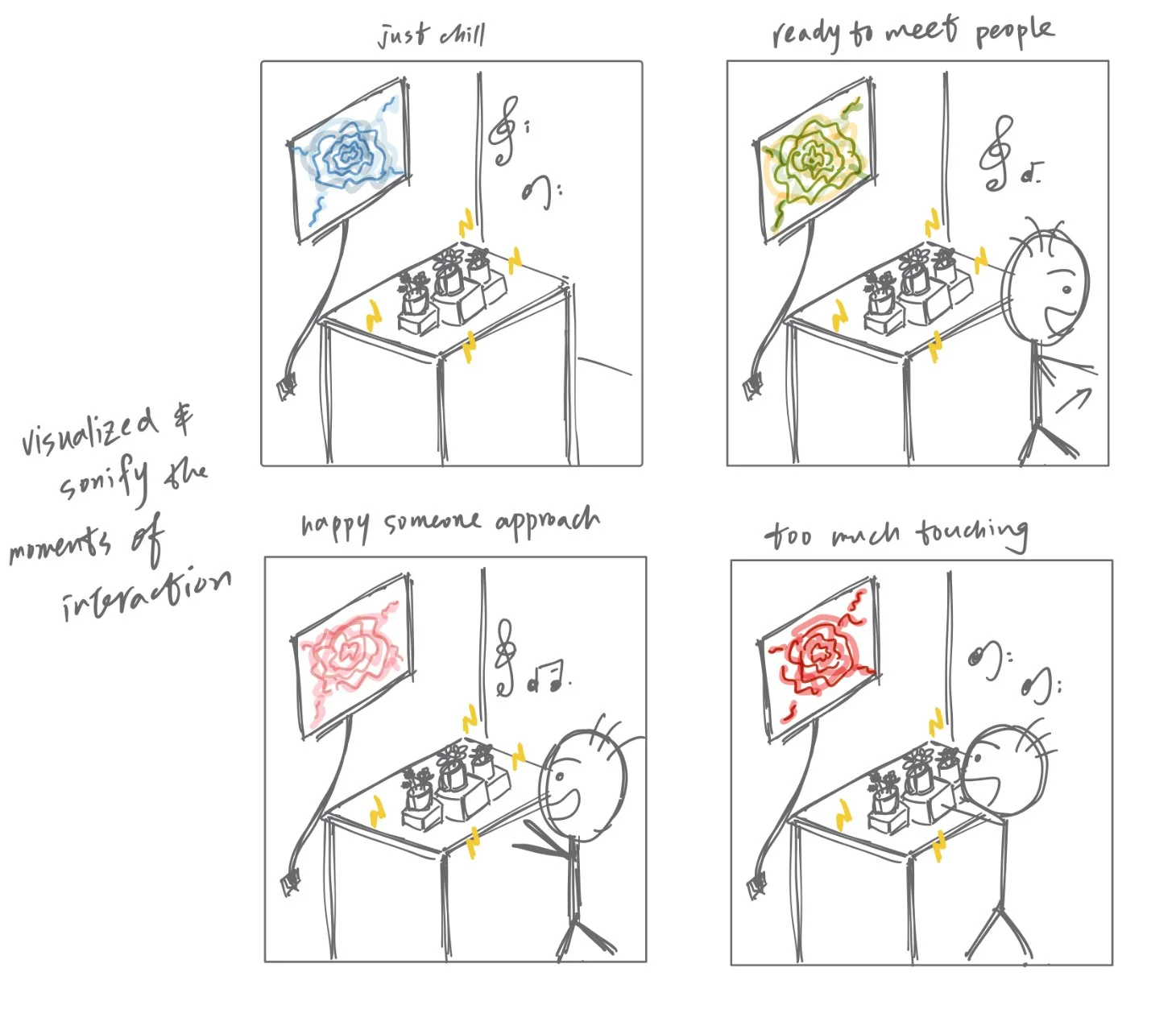
fig.4 Storyboard for potential design
vid.2 Proximity data collection testing
vid.3 Testing Data-Driven Music Switching