Collaborate with: Southwark Council, Walworth Library
Lissy, Wuyou, Chenchen, Ellen
community
memory
archive

/04 methods
-Toolkit -Affinity Diagram -Crazy 8’s -Prototype Testings
/01 goal
Design a local memory preservation and information sharing system inspired by and integrated with a local library collection.
/02 ref.
-The community quilt artifact displayed at the Southwark Library
-PostSecret
/03 test
Redefining “local” as shared memory and experience can foster deeper connections between residents
design:
| collecting & sharing system
01/
A monthly memory collection system that invites people to come by and write down a memory for the current month.
03/
In return, you receive a randomly selected memory from someone else who participated the previous month.
| cards
Even as everyone goes about their busy daily lives, we hope this project creates a moment of connection and shared belonging. We hope that it can act as a community living time capsule that you can return to whenever you want.
| viewfinder & projector
02/
Draw or write whatever you want and drop the cards into the box.
04/
You can then start your community memory card collection in the booklet we provide.
As previously noted, participants receive memory cards when they contribute to the system. Inspired by vintage projectors, these cards are designed to let individuals engage with community memories by projecting them onto walls using a light source—allowing them to reflect and connect in the comfort of their own space.

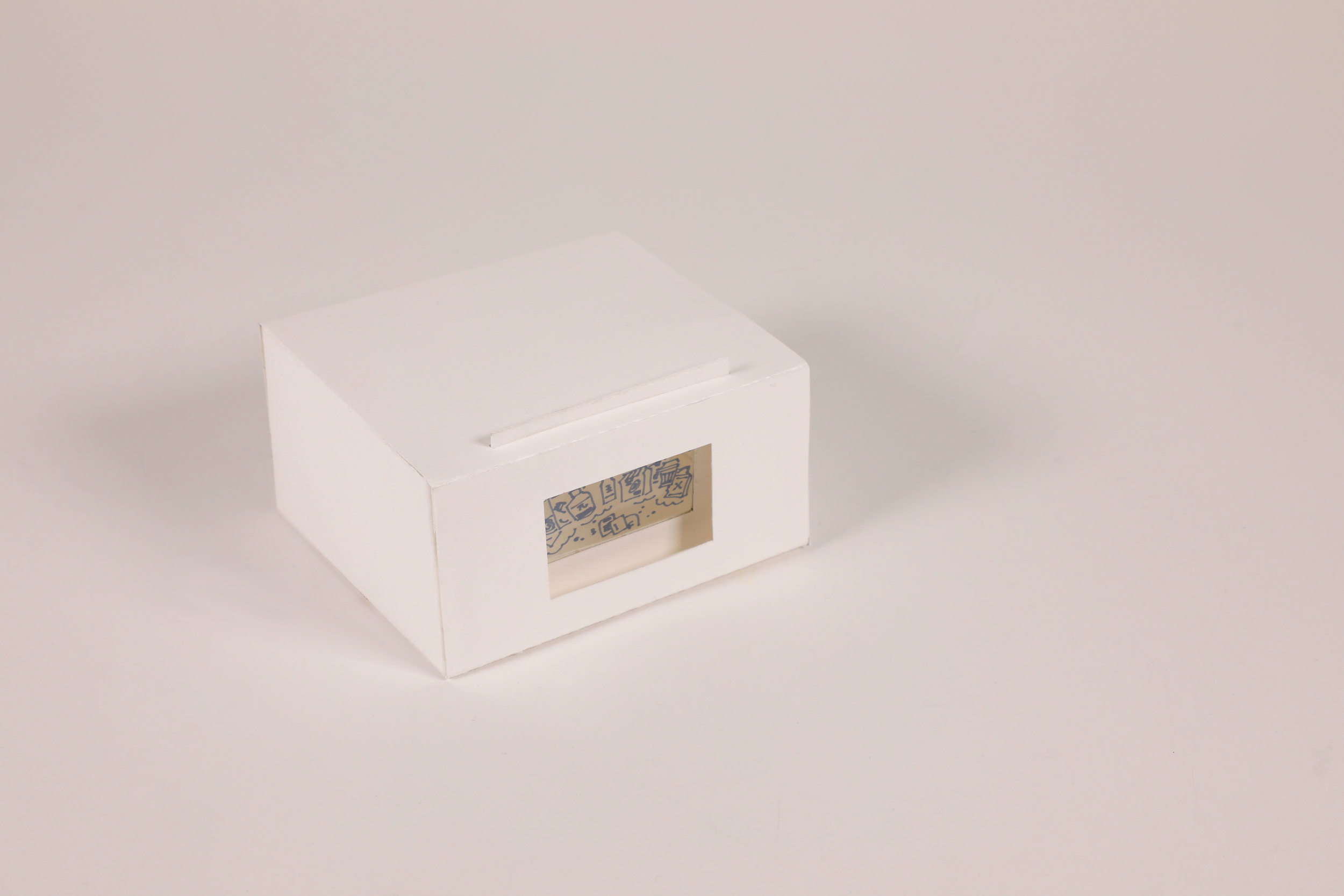
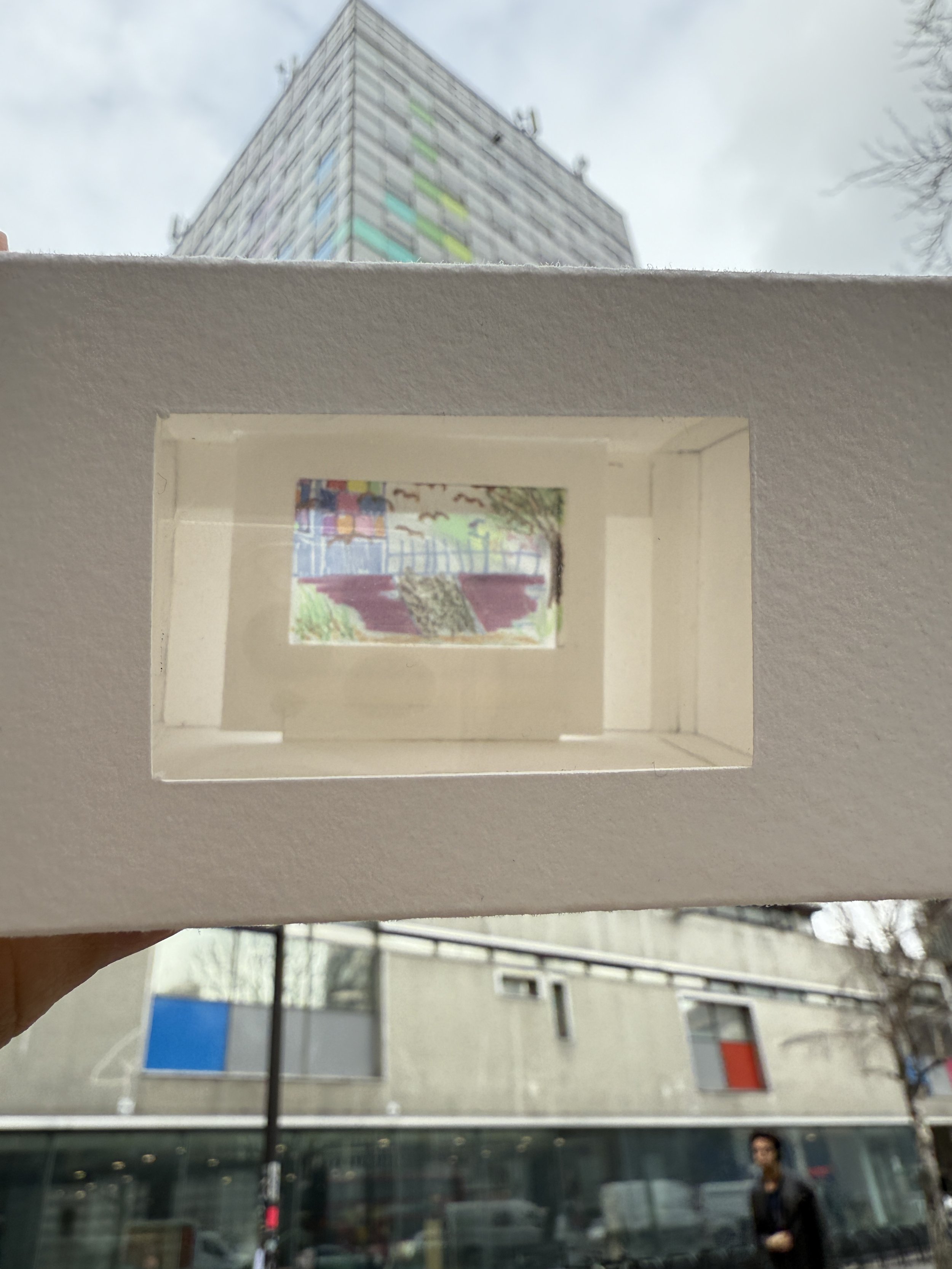
In addition, people can create their own viewfinder using an open-source blueprint. This invites individuals to step out into the wider world and see various places through a new lens—using the viewfinder and memory cards to reflect on different experiences. Inspired by vintage film reels and nostalgic viewfinder toys, this offers a playful and meaningful way to engage with collective memory.
the
making
the making
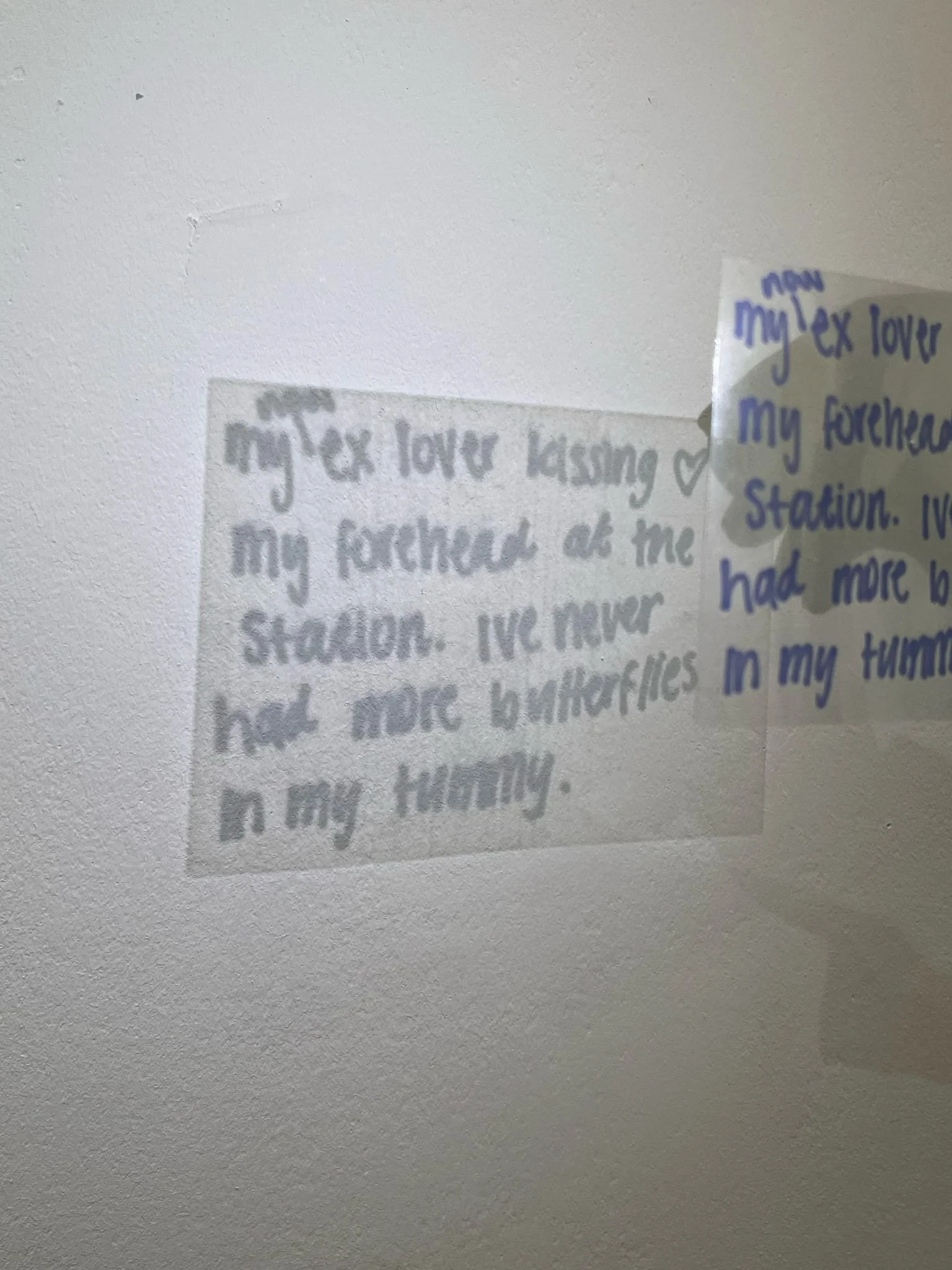
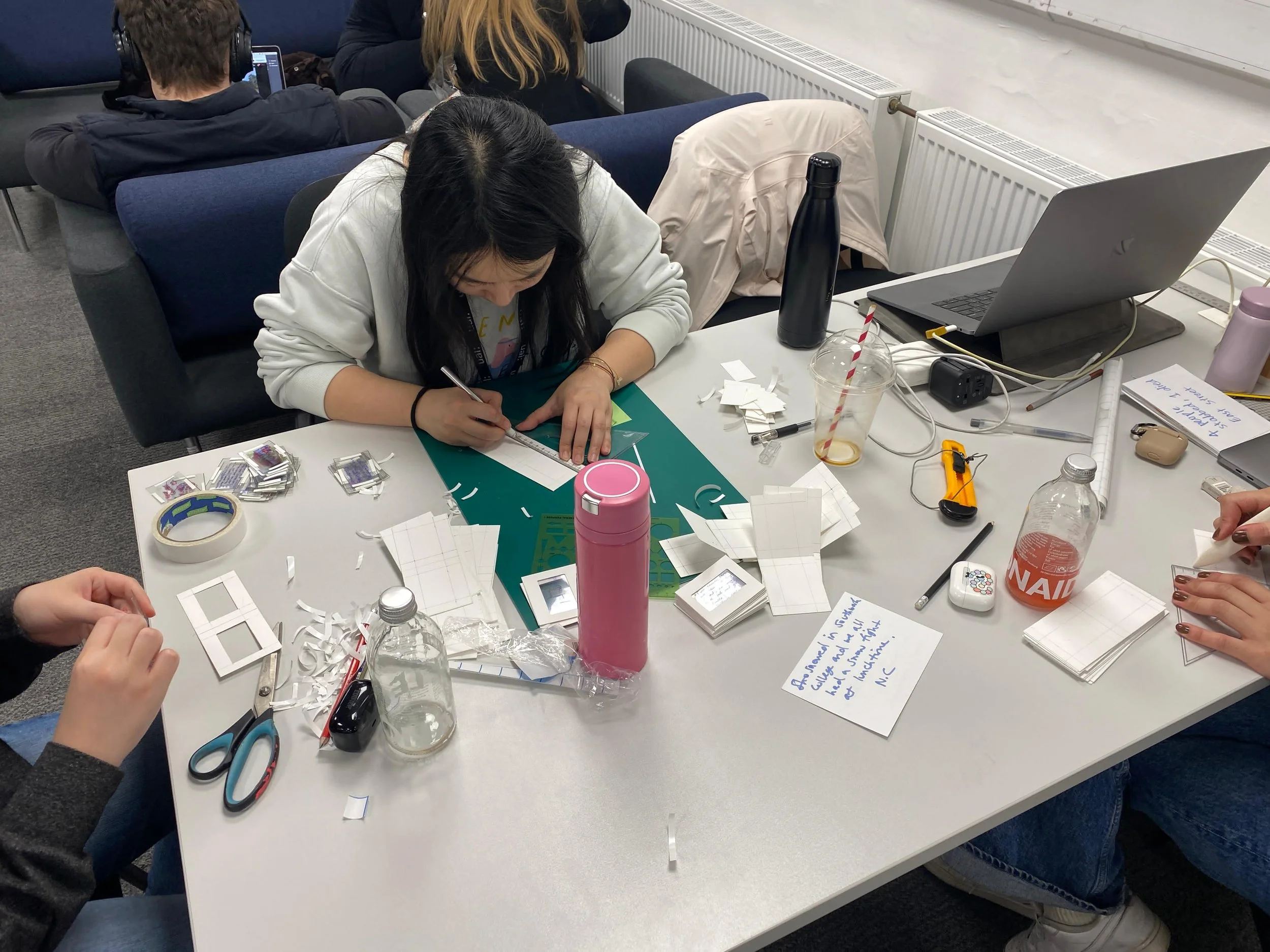
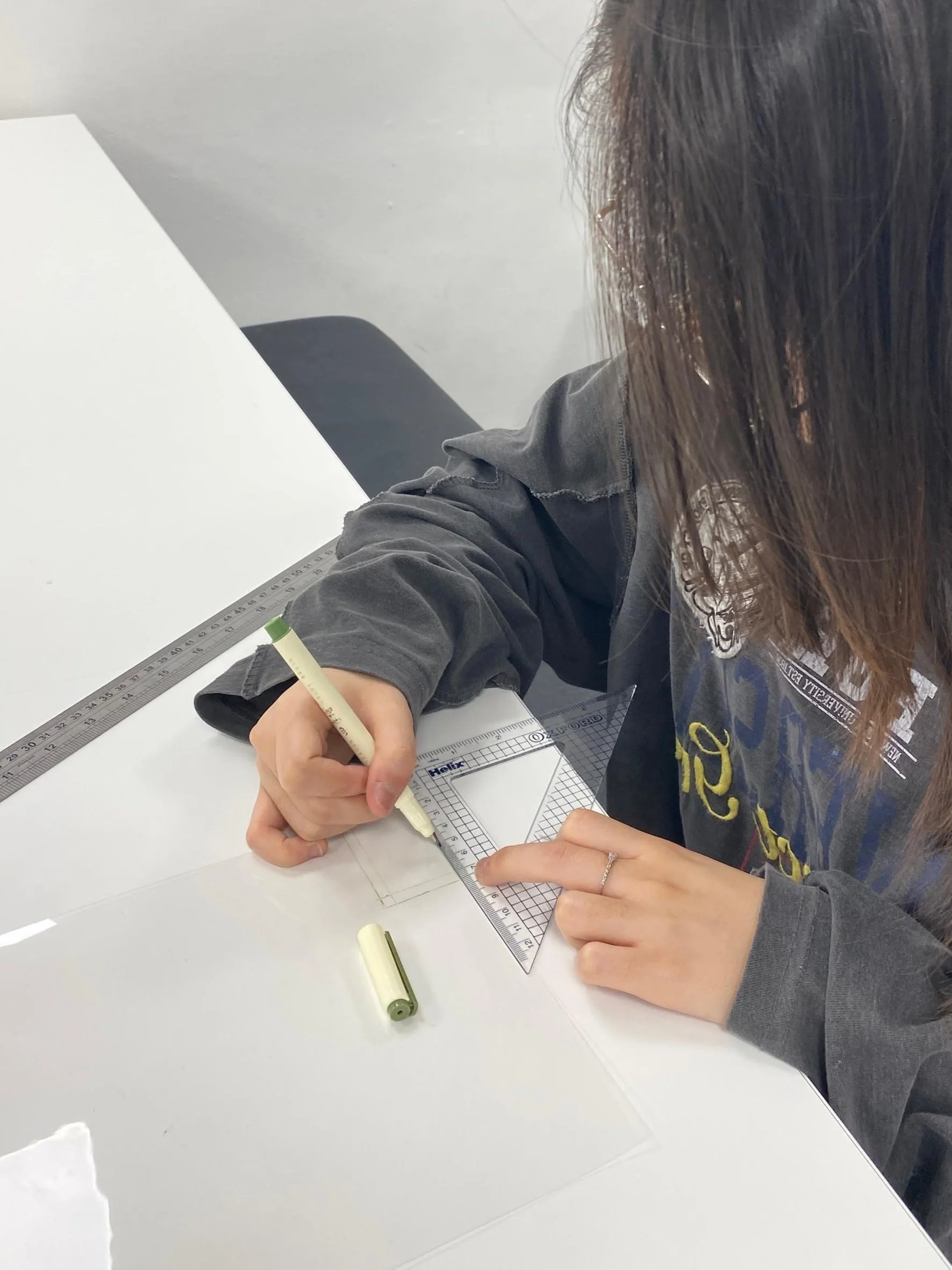
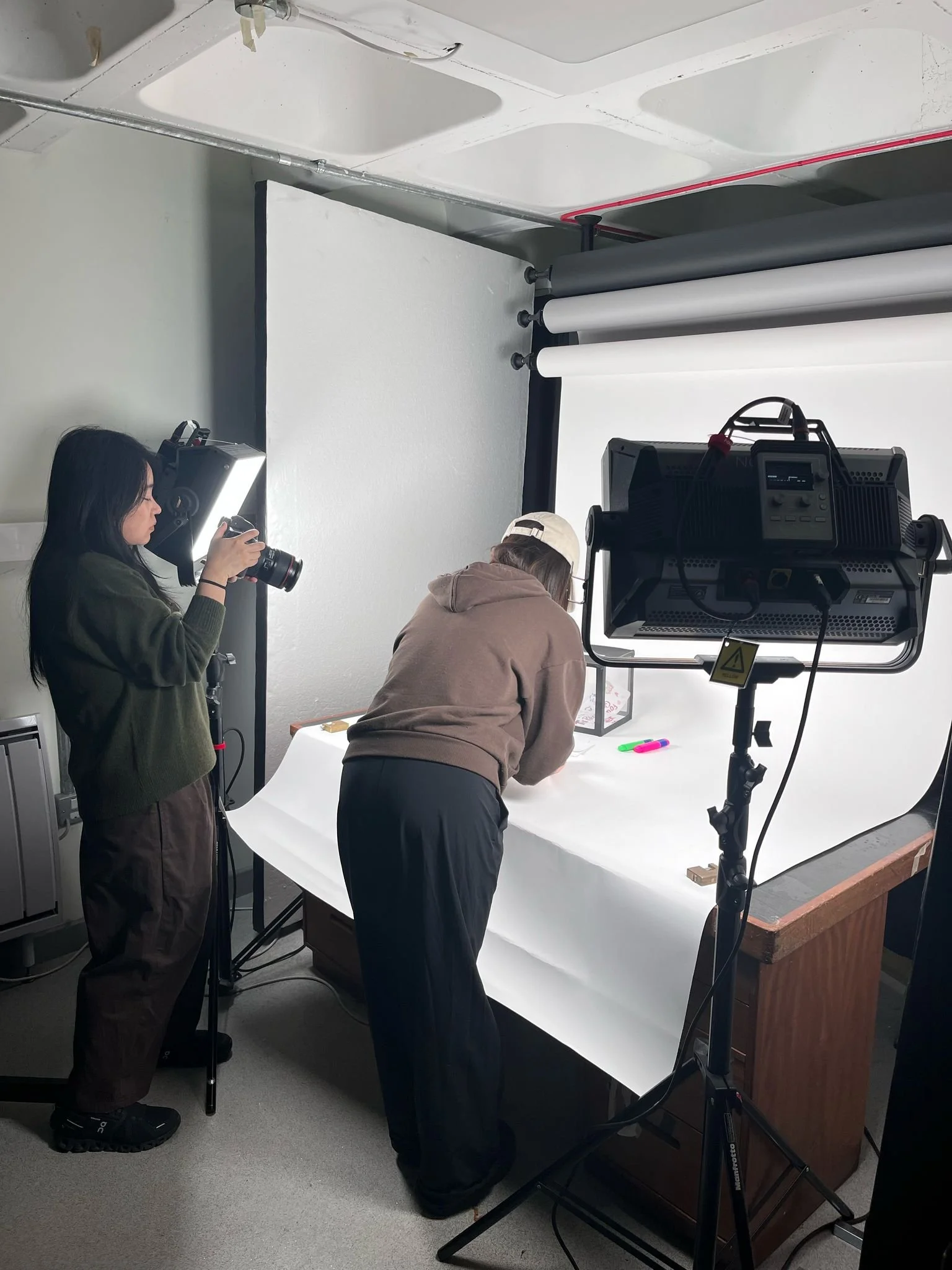
We began by scanning all the memory postcards we received, resizing them into a portable format. Each one was printed on transparent paper to echo the feeling of old film reels. Since the transparent material is delicate and prone to creasing, we added a sturdy paper backing—similar to a Polaroid frame—to protect and enhance its tactile quality.
To complete the experience, we also created a collection booklet using thicker paper. This not only helps people organize their memory cards, but also adds a sense of value and invites ongoing participation—encouraging visitors to collect, revisit, and contribute new memories over time.
ref.
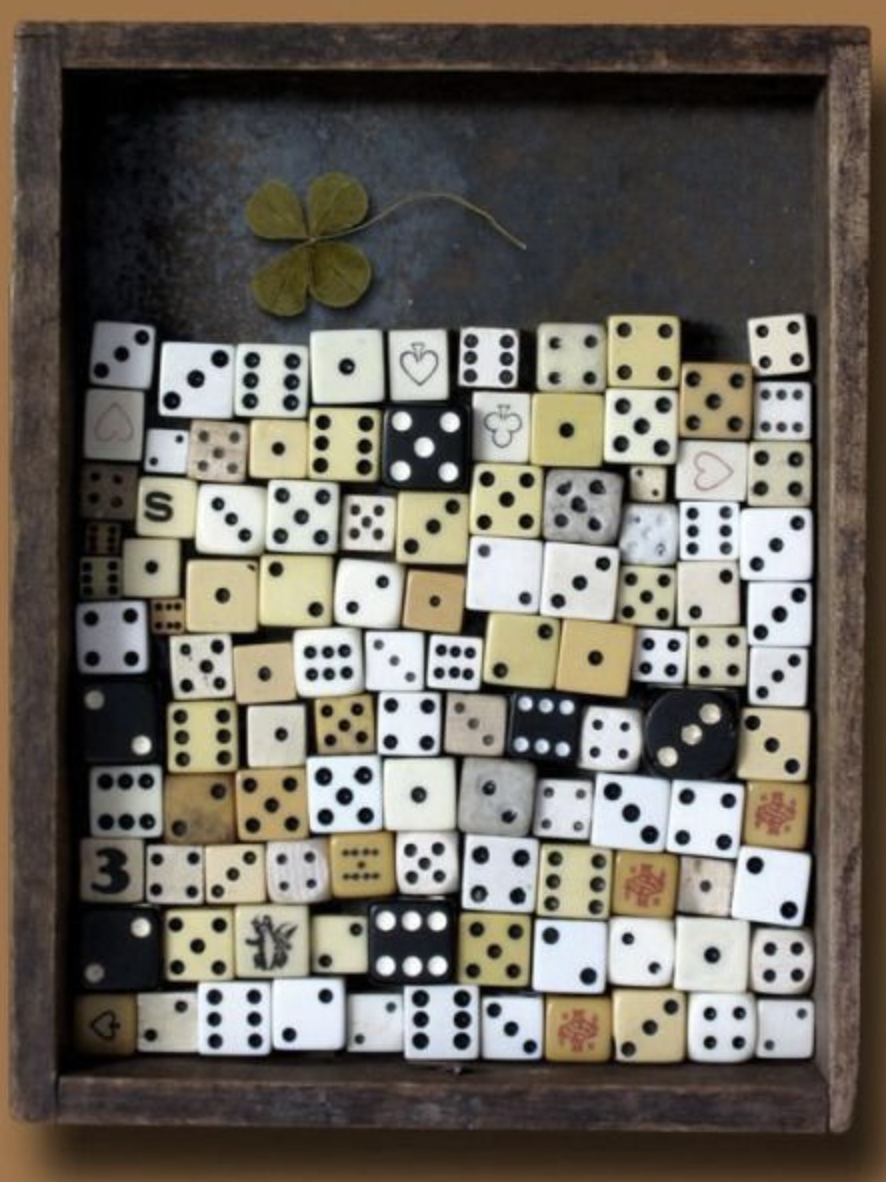
We explored the psychological motivations behind why people collect things, focusing on ideas like self-fulfillment and self-enhancement. These insights helped shape our approach to the memory card collection. Beyond simply gathering memories, we hope the process encourages individuals to feel a deeper sense of connection to the community through shared stories and experiences.