
brain
scapes

4-people team
Low-tech, discover the unnoticed beauty in everyday life

Exploring, exploding, exploiting process, criticality and interaction in relation to user experience design.
group project
Neuroaesthetic
Partnership: Kinda Studios

/04 methods
-Direct Storytelling -Body Mapping -Affinity Diagram -Crazy 8’s -Prototype Testings
/01 goal
Design a way to make brain activity responding to aesthetic experiences visible, tangible, or interactive, using low-tech approaches and highlighting the often unnoticed moments in everyday life.
/02 ref.
-neuroscience -synesthesia -DMN
/03 test
Felt presence, calm, and peace. The visual bubble is interactively fun. A novel way to hear your own breath.
design:
Building an experiential installation composed of a series of moments designed to help participants see and feel breath in different formats. To visualize breath in real time and enhance sensory engagement, we’ve started working with TouchDesigner.
Amplifies everyday vital signs, breath, to externalise brain activity.
Through tangible, interactive expressions, we transform internal rhythms into playful, collaborative experiences in the physical world.
Stage 1: Reset
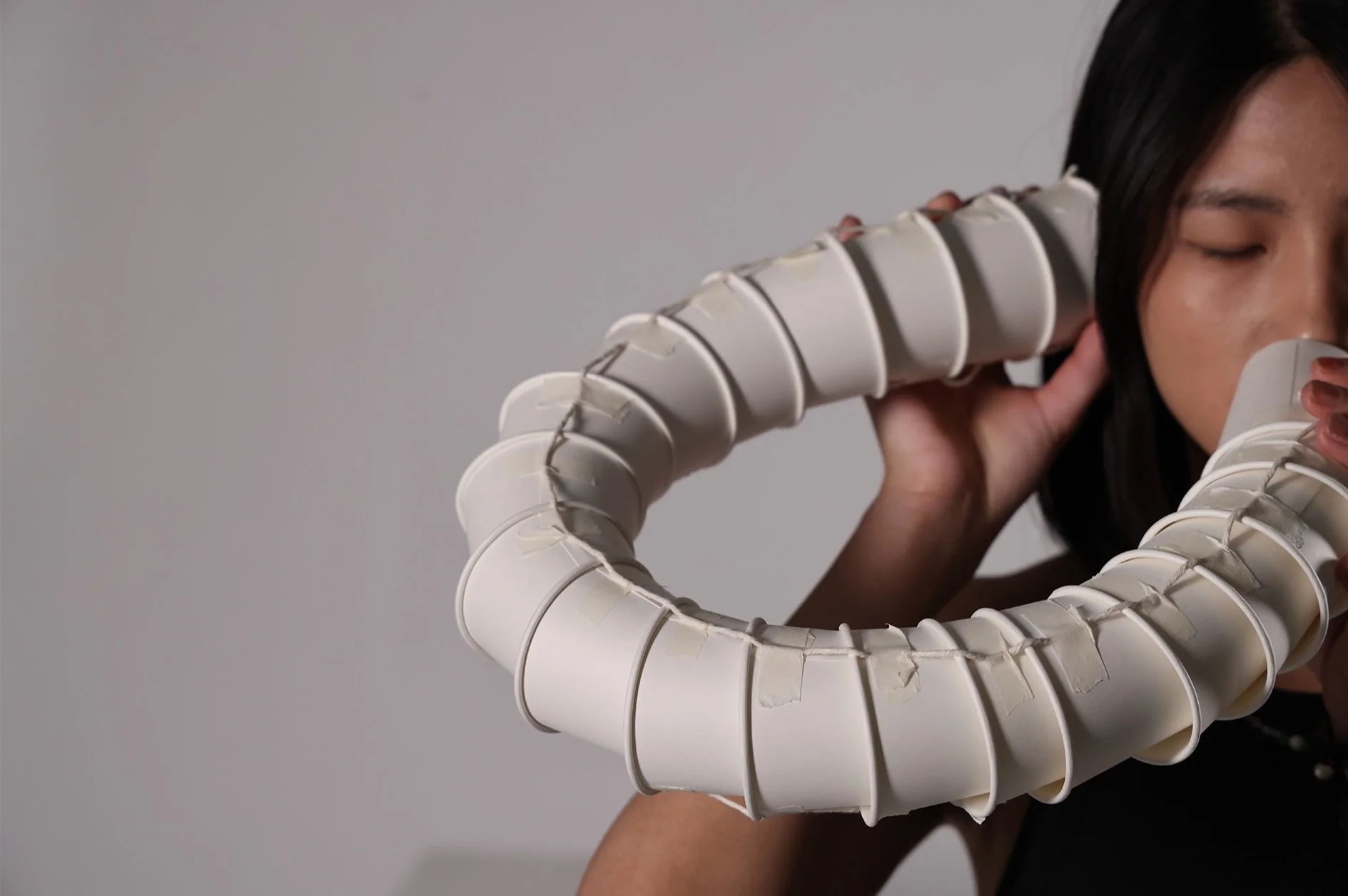
Breath with an elephant trunk, find your calm state.
Stage 2: Experience
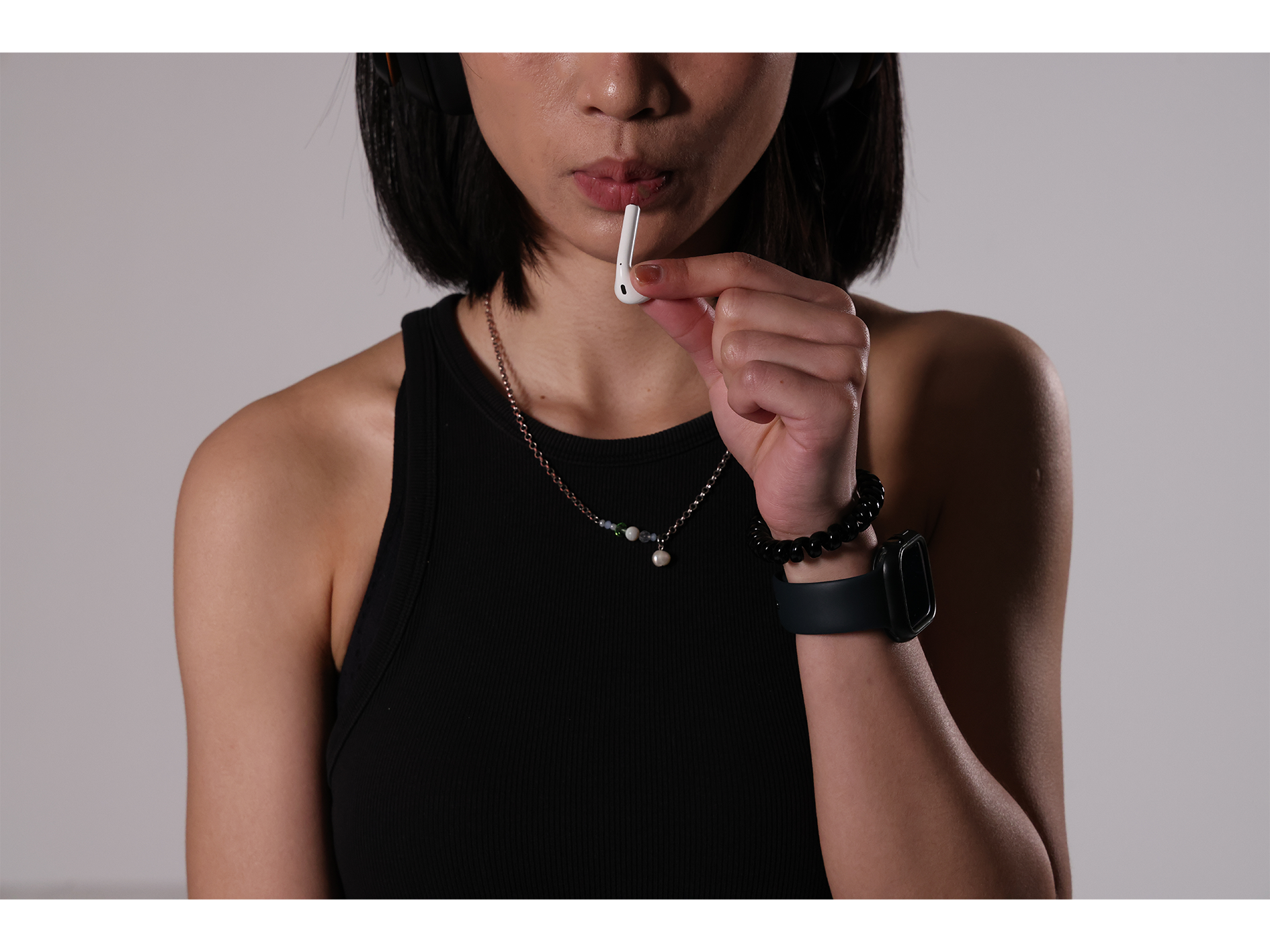
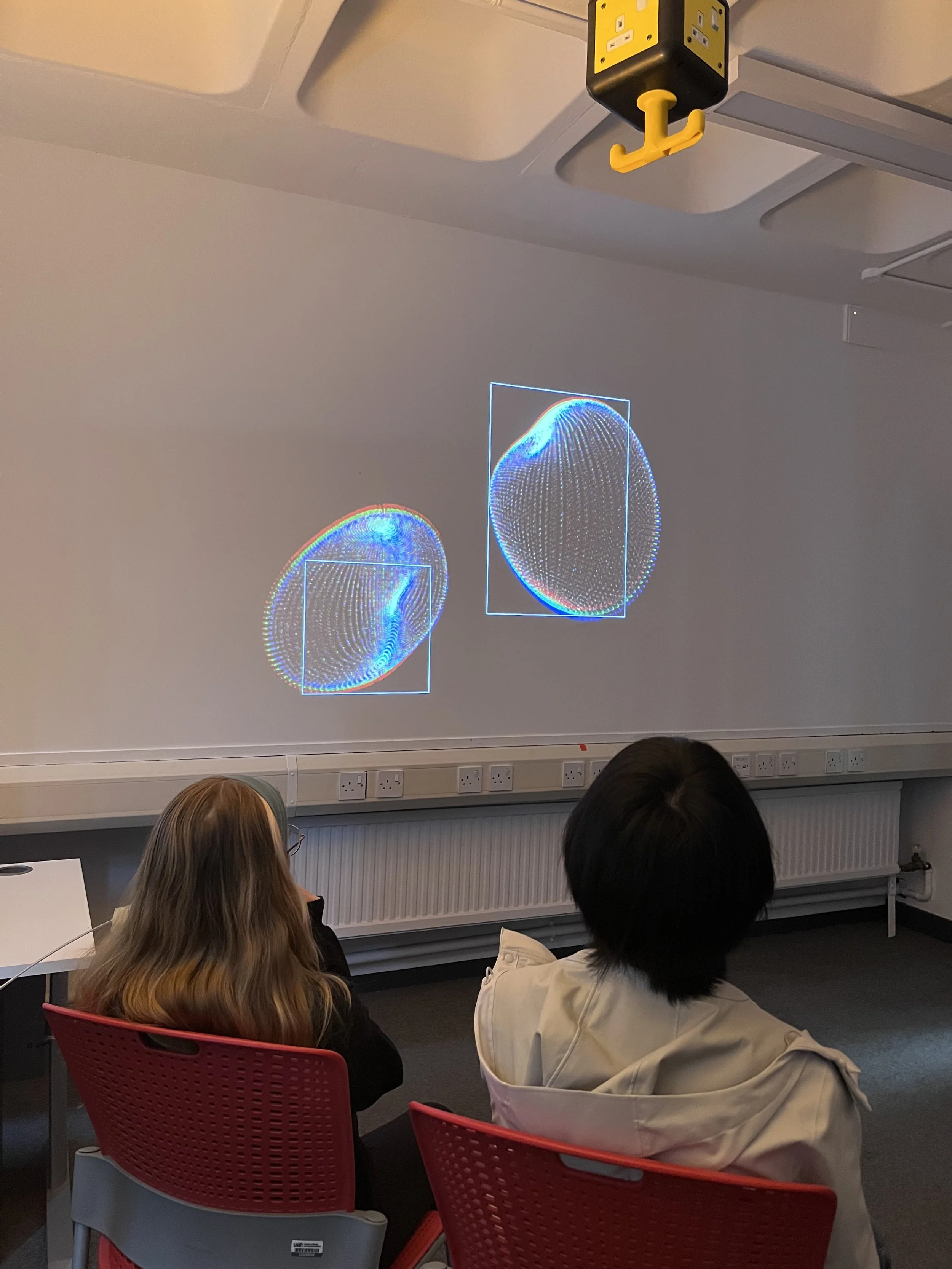
Breath into the microphone, seeing your digital breathing bubbles on the screen.
Photograph by Dahoon Lee / Edit by Jin Wang
Aware of Breath
user testing
Session one
The entire experience is guided by instructions, with time set aside to ensure participants feel safe and supported. After that, we would help everyone to settle into a calm and relaxed state.
We tested the experience with 3 pairs of participants, simplifying the process to focus solely on playing with their breath, without intentionally increasing heart rate or altering breathing rhythm.
Session two
We incorporated additional elements to engage other senses, such as silicone for tactile feedback and physical bubbles for interaction to enrich the overall experience.
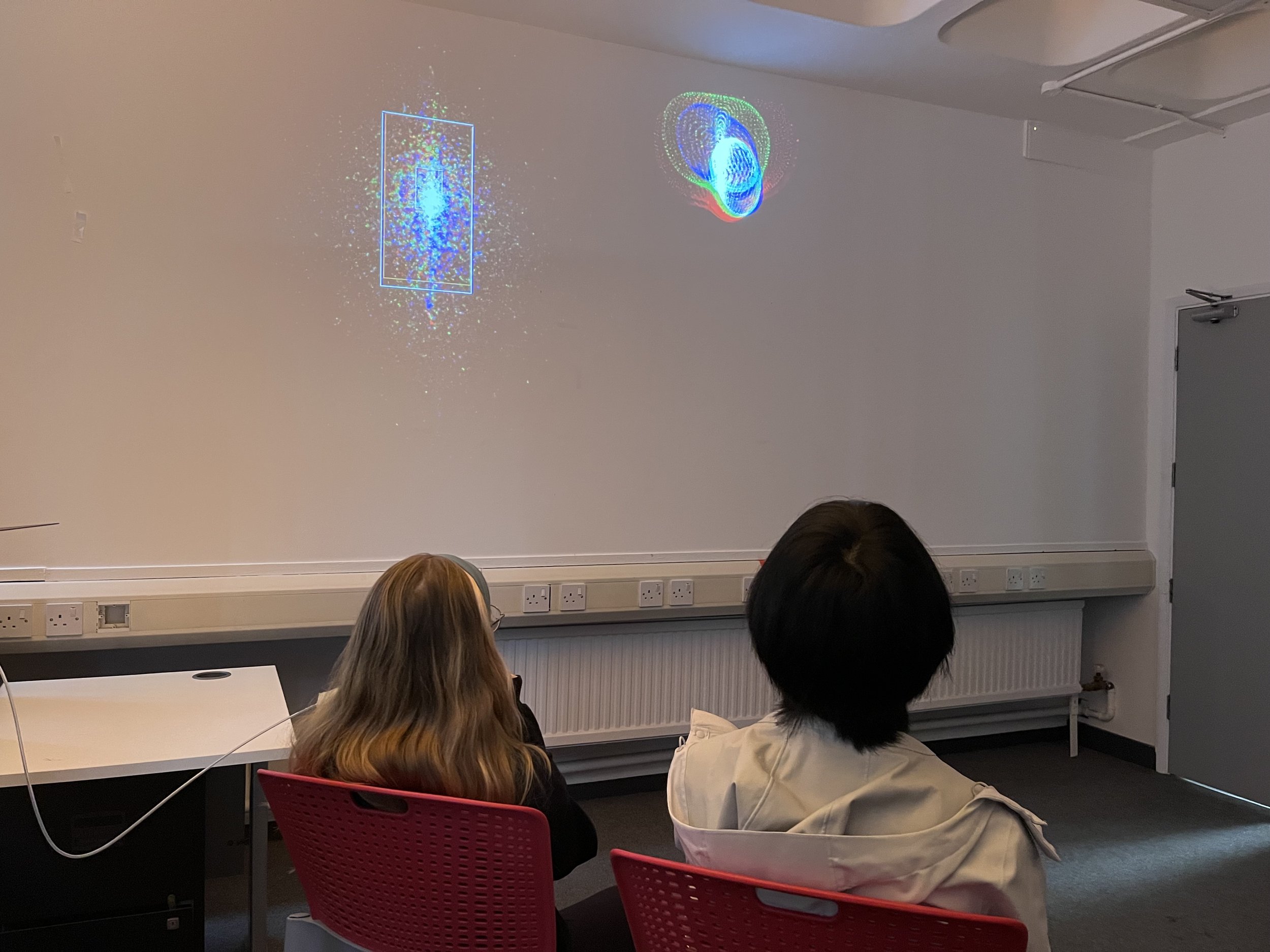


user feed back
user feed back
Distractions:
💬 "Environment matters – need to hide clutter for focus." – Tonicha
💬 “Silicon is distracted when it not synchronise with the breathing rhythm” Yanshan
💬 "The experience would be more soothing if there were background music." – Chenchen
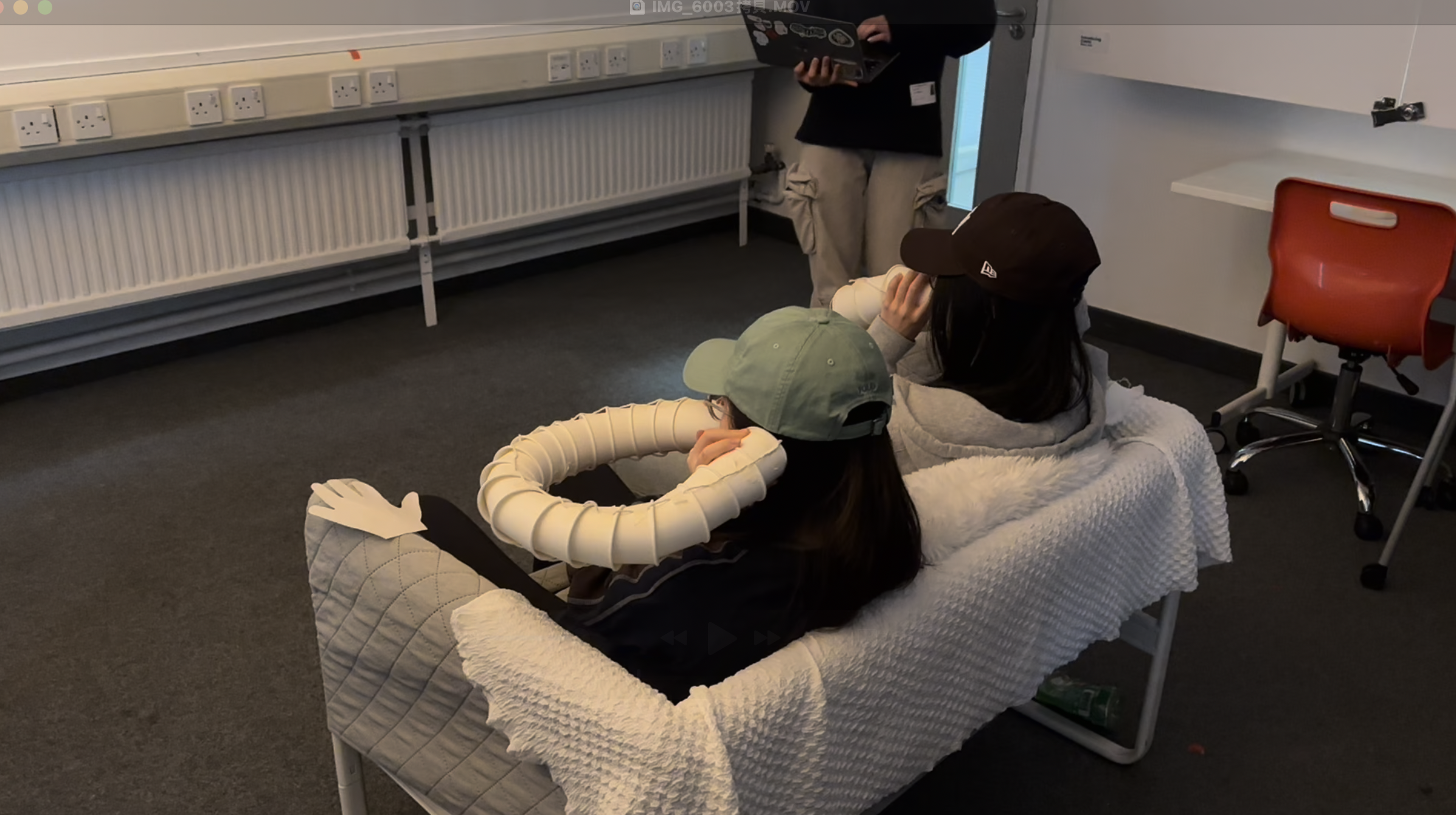
Collaborative
💬 "Think of the relationship between two participants, who are comfortable experiencing this together" – Tonicha
💬 "Exploring how different seating positions might affect the experience—such as sitting face-to-face or side by side." – Tonicha
user feed back

Bubbles:
💬 "Physical Bubbles become distracting without purpose... they should reflect my breath." – Cindy
💬 "Physical bubble is kinda fun, to change the speed the breath, fast and funny to change the vibe" – Zoe
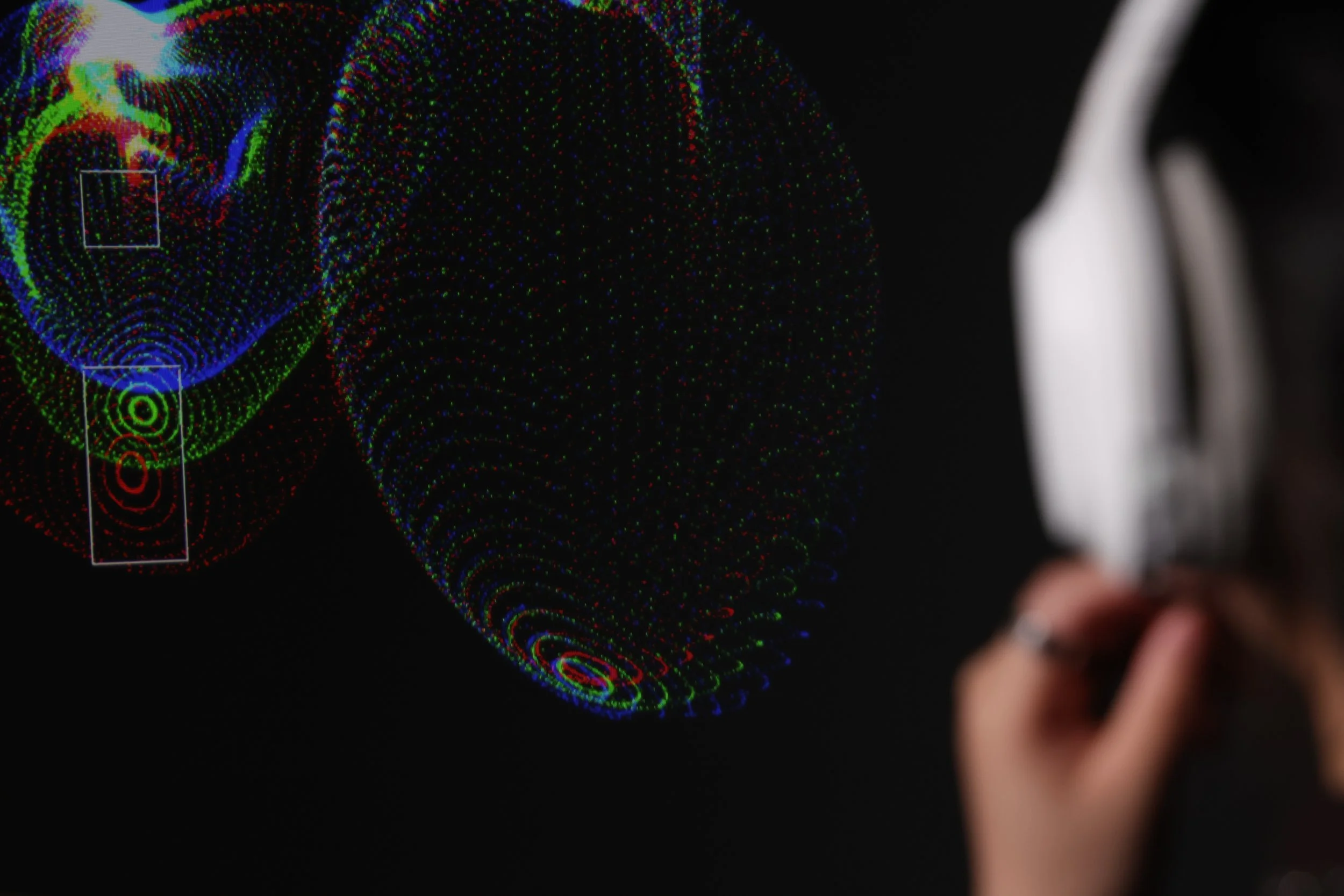
💬 "Can’t tell which bubble is mine... needs identifiers." – Shanshan
future development
future development
future development
Bubble Identifier
More Variables
Collaborative Mode
The first step we aim to address is the challenge of participant identification within digital bubbles. To enhance clarity and improve user experience, we propose implementing subtle visual cues such as color-coding or incorporating minimalist user avatars, like initials or symbols (e.g., ▲●), within each bubble to help users easily recognize their own and others’.
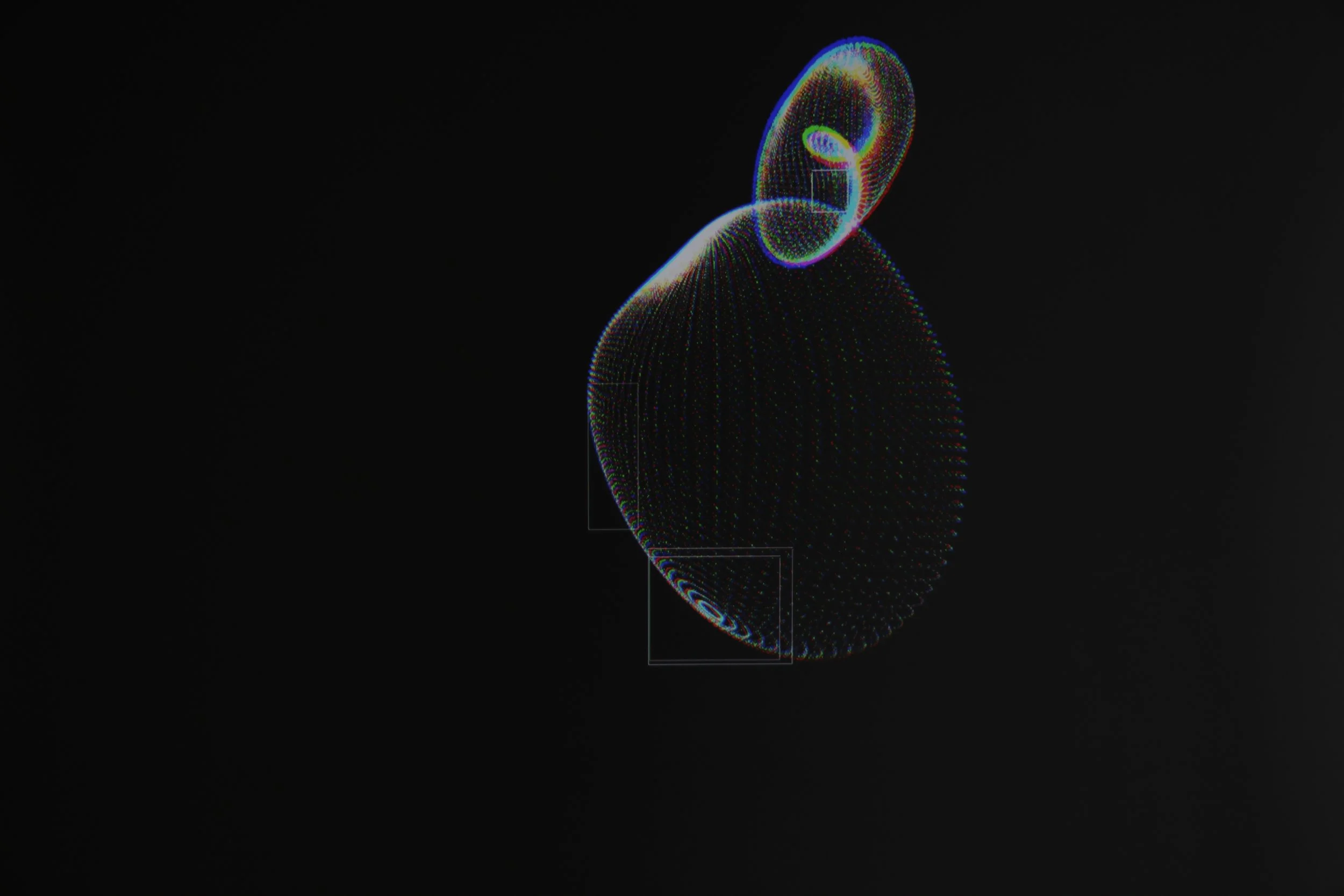
We plan to introduce additional personalized variables tailored to each participant, enhancing the overall experience to be more immersive, responsive, and engaging. The bubbles will serve as functional indicators:
Size reflects real-time breath depth,
Rise speed corresponds to inhalation pressure, and
Color shifts and expansion duration translate neuro-emotional states into visual cues.
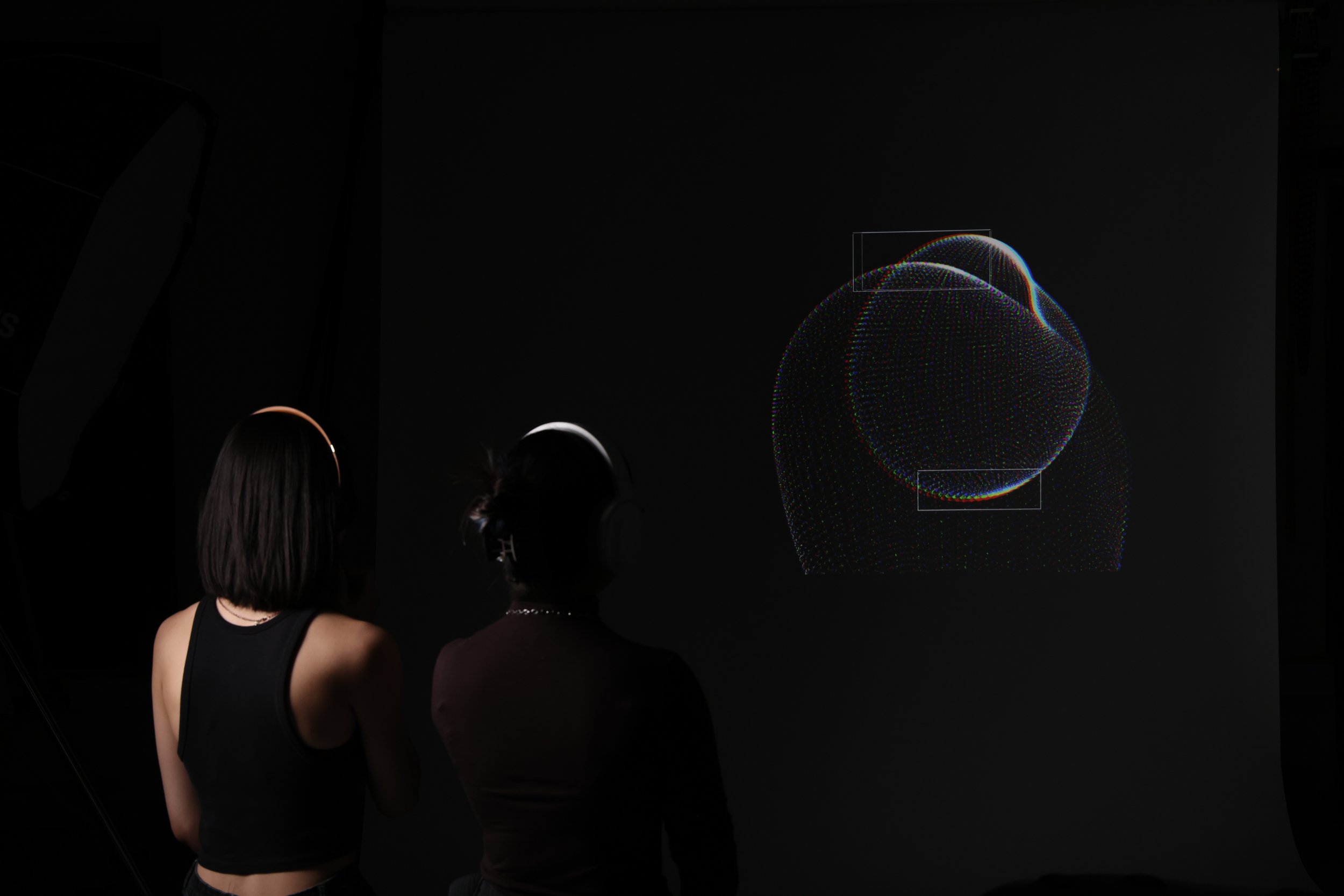
More importantly, we would like to introduce Collaborative Mode, featuring the Bubble Fusion mechanic. Participants synchronize their breathing patterns, causing individual bubbles to merge and unlock unique visual effects. This shared interaction not only creates a sense of connection but also enhances engagement among multiple users through real-time, breath-driven collaboration.