
traces OF
plants
Lissy & Ellen
- 06.

Posthumanism
As we shifted our direction, we began reflecting on what the device could offer both plants and humans. From our research, we noticed that plants are often treated as passive objects, with meanings imposed on them by humans. Our goal is to reverse this dynamic, allowing plants to express their needs and enabling people to care for them more effectively.
This idea aligns with the principles of posthumanism in design, which challenge the traditional human-centered mindset. Posthumanist design views creation as a collaborative process among humans, technologies, and non-human entities such as plants, animals, and ecosystems. By embracing this perspective, we aim to design an interactive system that considers the perspectives of both humans and plants, fostering a more balanced and responsive relationship between the two.
Difficulties Encountered
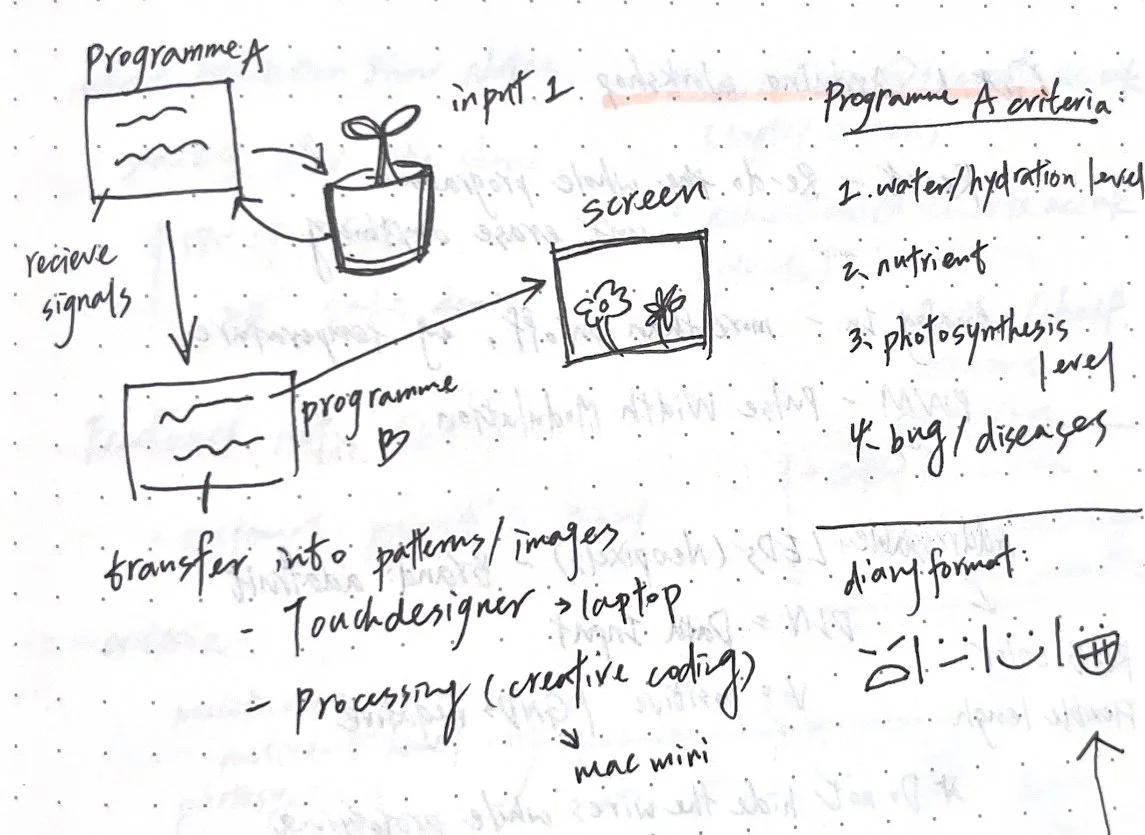

Our initial goal with Arduino was to represent a houseplant’s basic needs, such as hydration, nutrients, disease, and interaction. However, we encountered a limitation: we lacked an amplifier powerful enough to accurately capture these bioelectrical signals. Even if available, such data would likely remain static for extended periods (for example, moisture levels stay relatively constant after watering), making it challenging to create dynamic or engaging visual outputs.
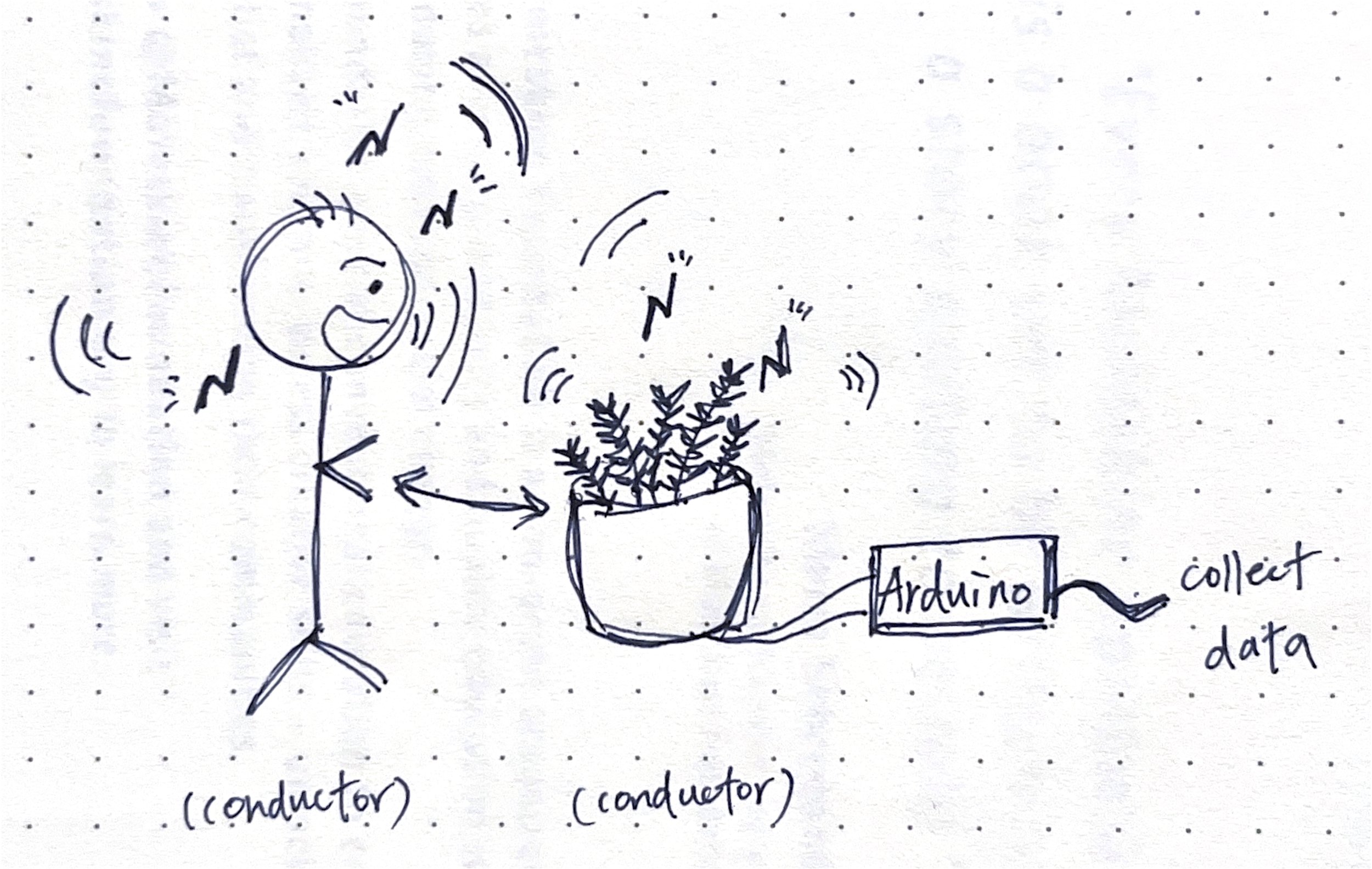
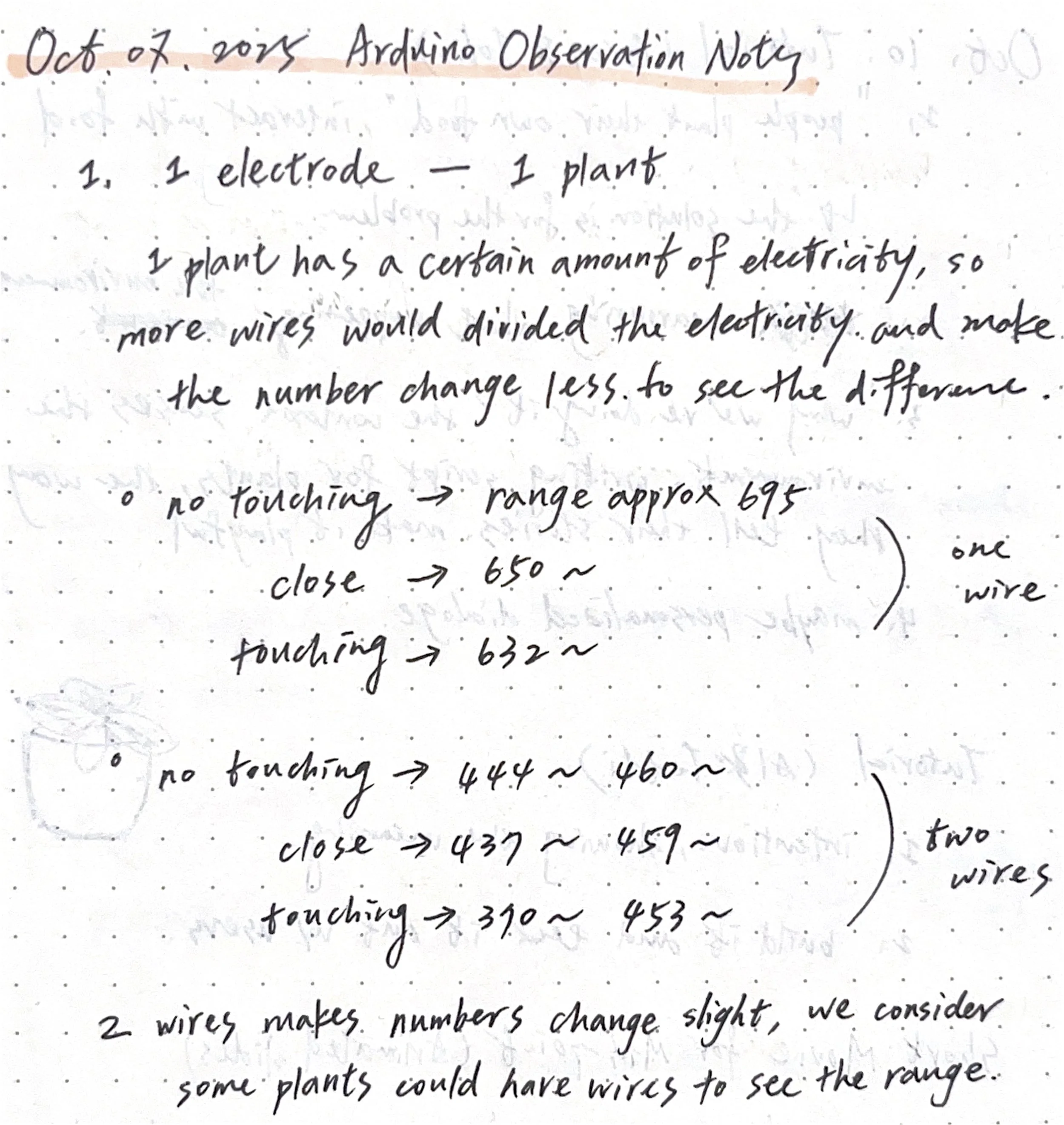
To address this, we shifted our focus toward collecting proximity data that captures the interaction between humans and plants. By connecting a touch sensor to the Arduino and using the plant as a conductor, we could detect when a person approached or made contact. The system generates numerical values representing proximity, which can then be visualized to illustrate levels of engagement with the plant.
After collecting these interaction data points, we plan to import them into TouchDesigner to create real-time visualizations. By translating proximity and touch into responsive graphics, the installation aims to make plant interactions visible and intuitive, encouraging people to engage more actively with their houseplants.
Experimentation
We successfully connected the touch sensor to collect proximity data and consulted Joanne for advice on experimenting with other sensors to make the interaction more engaging. Also, we attended a TouchDesigner workshop to begin developing visual outputs based on the collected data.
weeklyreview.
We began the making process to explore the technical aspects of the project while simultaneously researching visual patterns and considering how we wanted to present them. At this stage, we also started thinking about ways to make the overall experience more immersive and engaging.